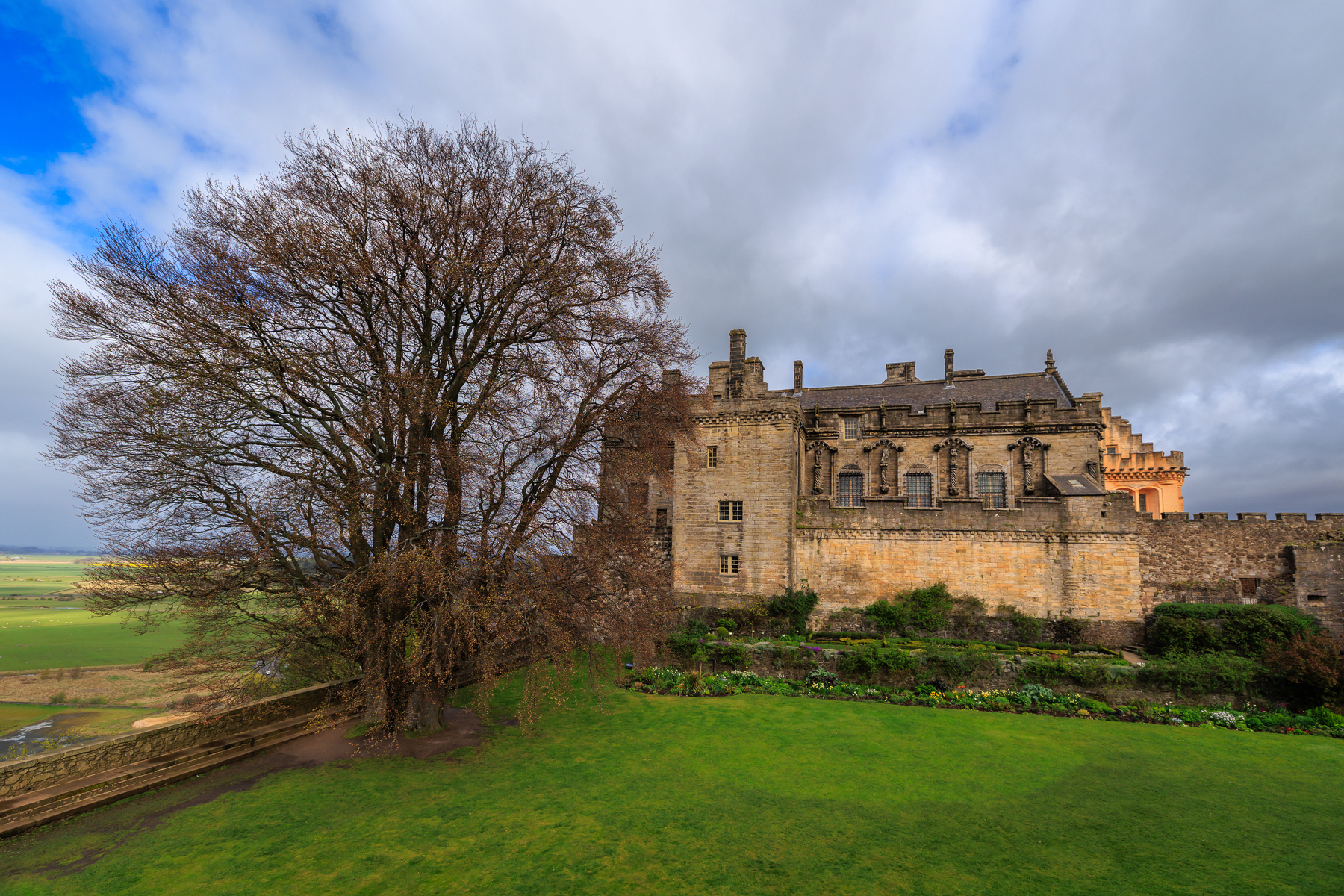
Stirling Castle: The Gateway to the Highlands
Stirling Castle rises above the surrounding countryside, positioned at one of the most strategically important locations in Scotland. Perched on a volcanic crag, it overlooks the River Forth and the natural route between the Highlands and the Lowlands.
For centuries, control of Stirling meant control of Scotland. The castle played a central role during the Wars of Scottish Independence, including the nearby battles of Stirling Bridge (1297), where William Wallace defeated English forces, and Bannockburn (1314), where Robert the Bruce secured a decisive Scottish victory.
The castle later became a favored royal residence, particularly under the Stewart kings. Mary, Queen of Scots was crowned here in 1543 as an infant, and much of the present structure reflects Renaissance influences from that period.
Today, Stirling Castle stands not only as a fortress, but as a symbol of Scotland’s long struggle for independence and identity—set against a landscape that still conveys its strategic importance.