Photography
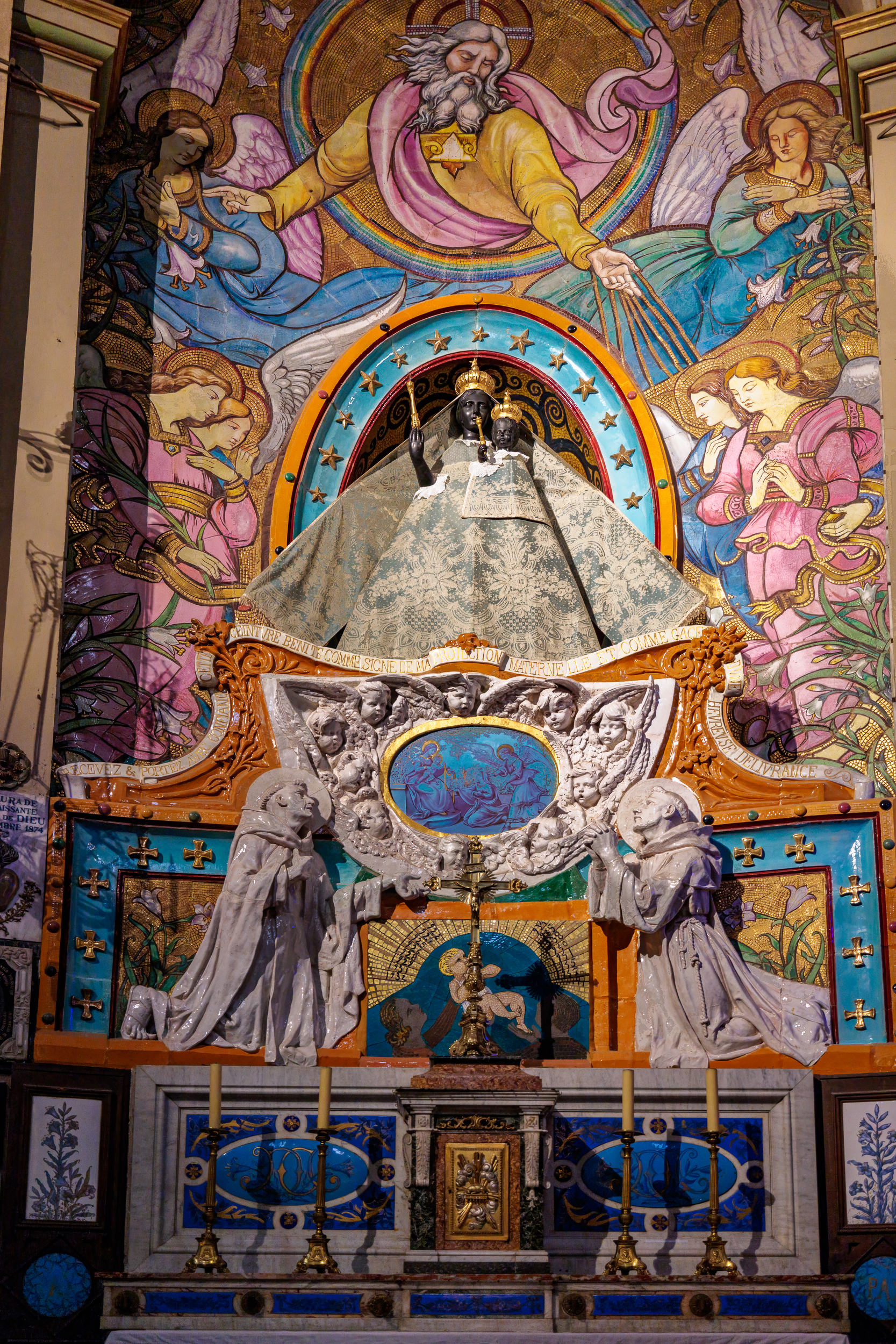
The Black Madonna of La Daurade, Toulouse - La Vierge Noire de la Daurade, Toulouse
EN: Venerated since the Middle Ages, the Black Madonna of Notre-Dame de la Daurade is one of Toulouse’s most important Marian figures. Shown with the Child beneath a protective mantle, she is linked to the safeguarding of the city and the boatmen of the Garonne. Like the Black Madonna of Częstochowa in Poland, she belongs to a wider European tradition in which these dark icons symbolize divine mystery, closeness to the people, and the promise of protection. Their color, sometimes born of centuries of patina, also evokes the depth and eternity of faith.
FR: Vénérée depuis le Moyen Âge, la Vierge Noire de la basilique Notre-Dame de la Daurade est l’une des figures mariales les plus emblématiques de Toulouse. Représentée avec l’Enfant sous un manteau protecteur, elle est associée à la protection des habitants et des marins de la Garonne. Comme la Vierge noire de Częstochowa en Pologne, elle s’inscrit dans une tradition européenne où ces icônes sombres symbolisent à la fois le mystère divin, la proximité avec le peuple et la promesse de protection. Leur couleur, née parfois de la patine du temps, évoque aussi la profondeur et l’éternité de la foi.
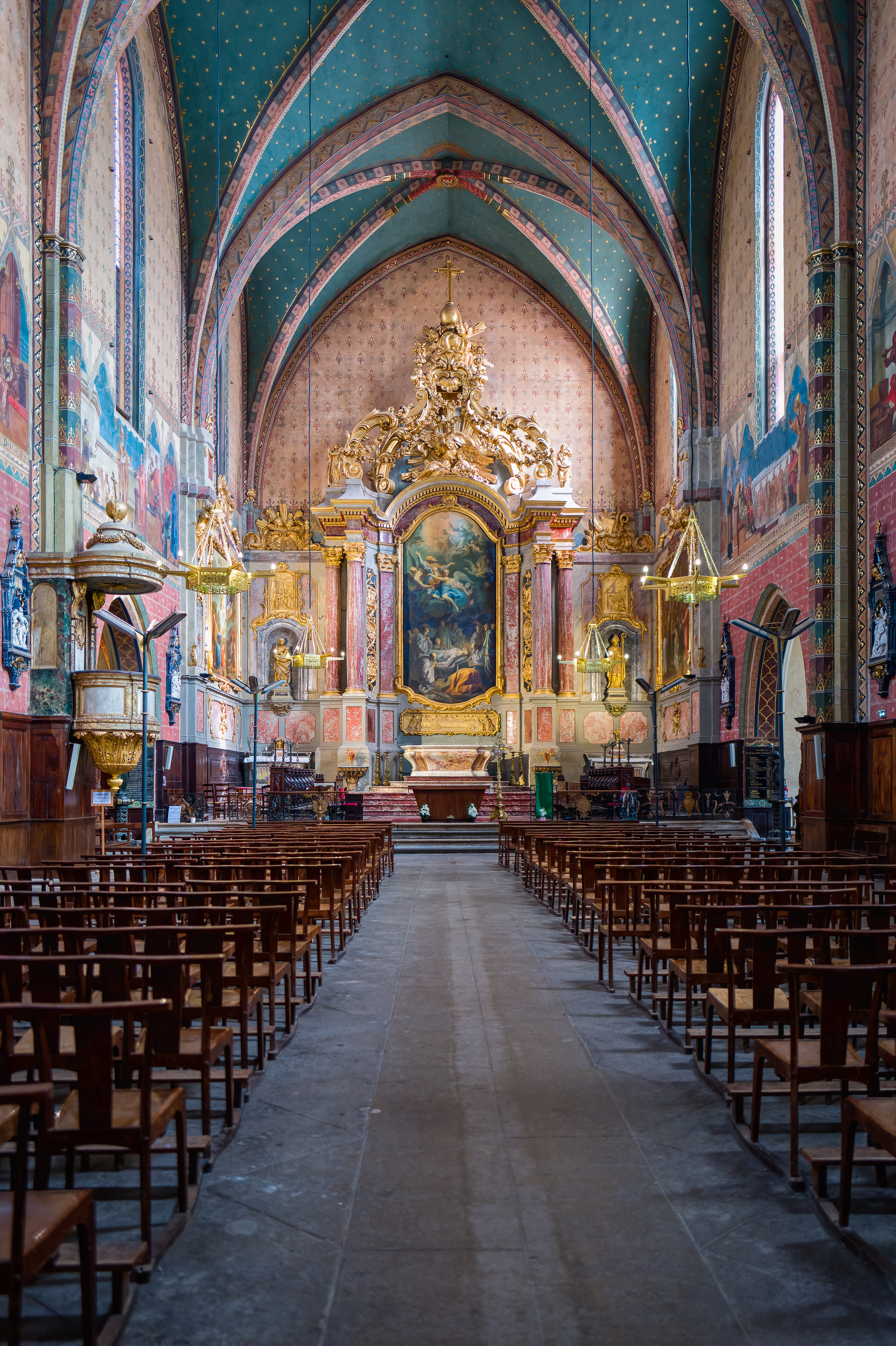
Intérieur de Notre-Dame de la Dalbade, Toulouse - Interior of Notre-Dame de la Dalbade, Toulouse
FR: Fondée au XVe siècle et reconstruite après plusieurs destructions, l’église Notre-Dame de la Dalbade cache derrière sa façade sobre un intérieur d’une grande richesse. Sa voûte bleue étoilée et son retable baroque doré dominent la nef, offrant un contraste saisissant entre austérité extérieure et splendeur intérieure.
EN: Founded in the 15th century and rebuilt after several setbacks, Notre-Dame de la Dalbade conceals behind its plain façade a richly decorated interior. The starry blue vault and gilded Baroque altarpiece dominate the nave, creating a striking contrast between exterior simplicity and interior splendor.
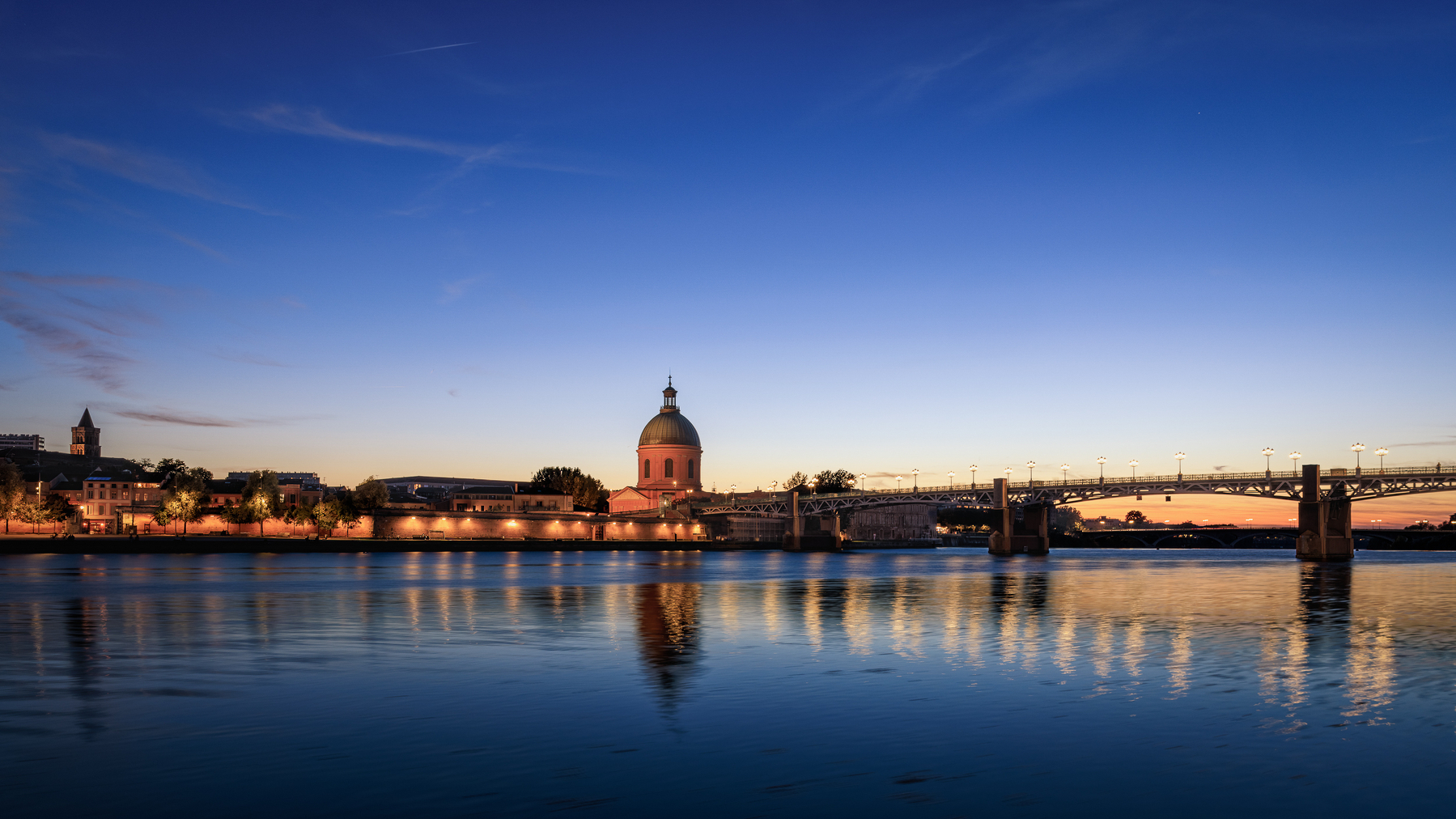
Twilight on the Garonne
EN: The Dôme de La Grave and the Pont Saint-Pierre at twilight, reflected in the calm waters of the Garonne. Toulouse, October 2025.
FR: Le Dôme de La Grave et le Pont Saint-Pierre au crépuscule, reflétés dans les eaux calmes de la Garonne. Toulouse, octobre 2025.
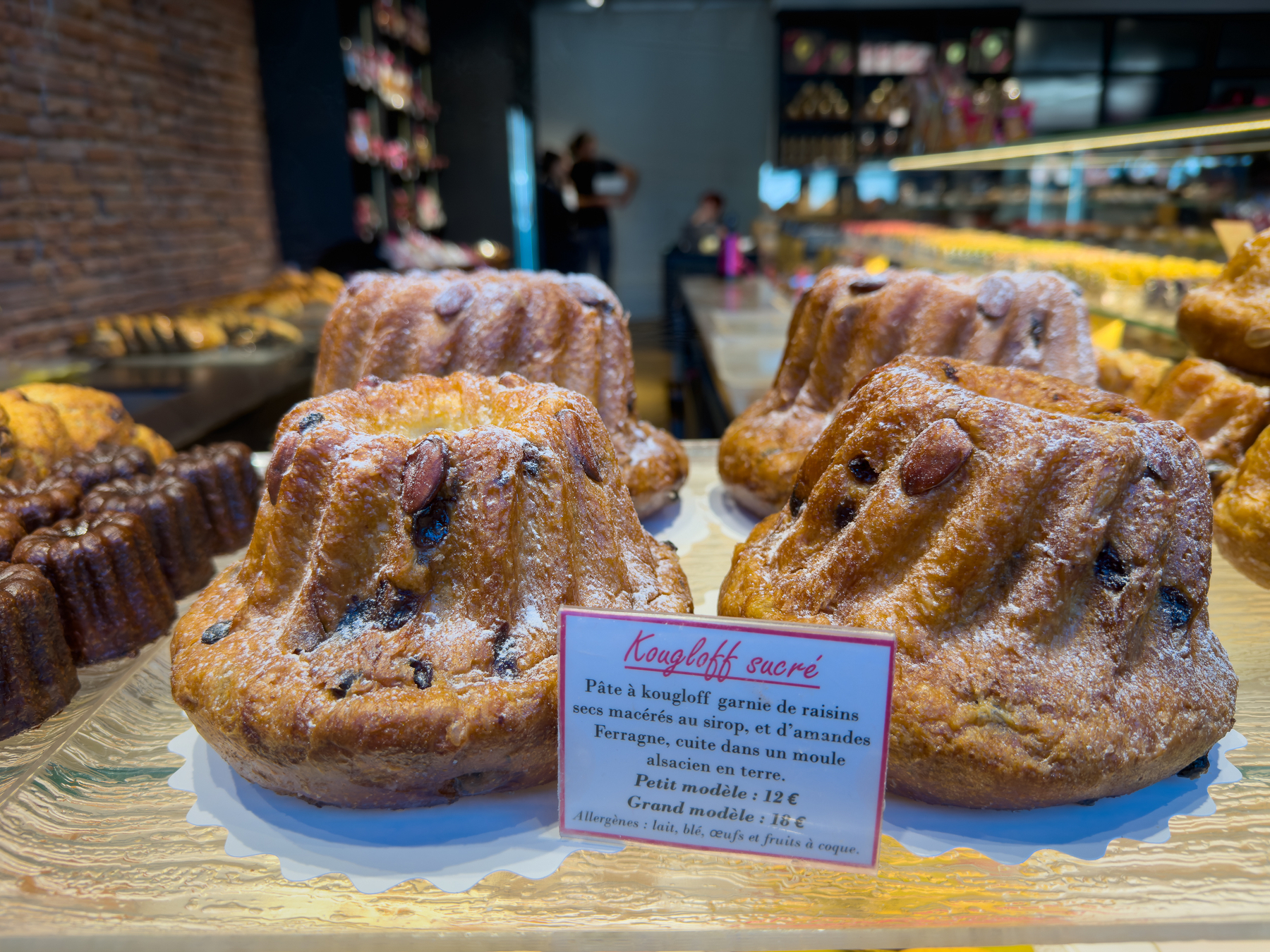
Kouglof in the Morning Light, Toulouse
This morning, I stopped in front of a patisserie window in Toulouse and saw kouglof on display. Golden, dusted with sugar, crowned with almonds — it looked festive and familiar.
I was carried back to childhood memories. Growing up in Pittsburgh, my father used to bring home kugloff made by a very talented pastry chef. It was a rare treat, a cake that felt both special and comforting. I almost never see it at home anymore.
Standing in Toulouse, far from where those memories were made, the sight of kouglof reminded me of him — how food, even across cultures and continents, carries the thread of memory.
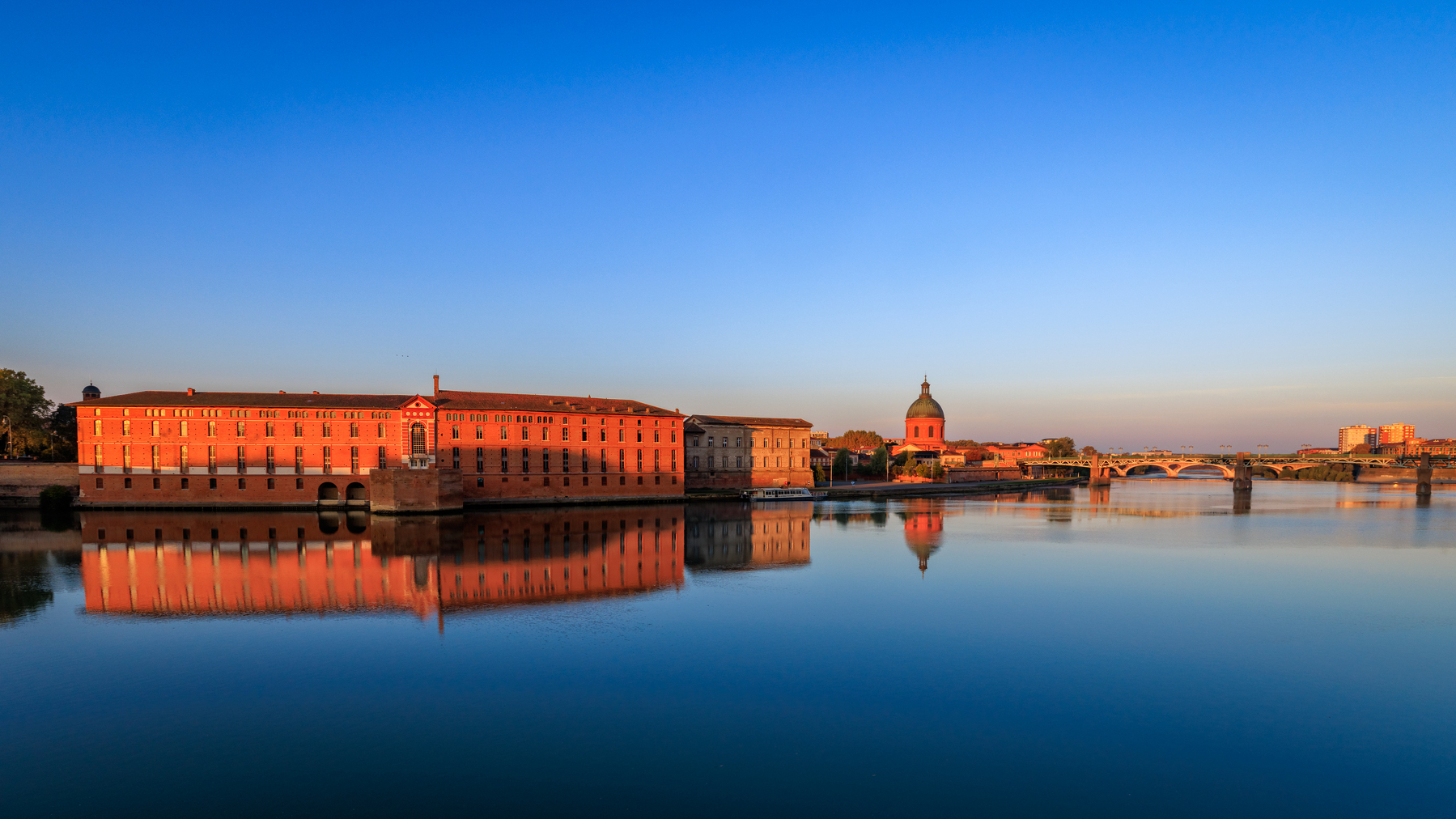
Dawn Reflections on the Garonne, Toulouse
EN: At sunrise, the Hôtel-Dieu Saint-Jacques and the Dome of La Grave glow in warm light, their reflections mirrored in the still waters of the Garonne. The Pont Saint-Pierre frames the scene, a timeless view of Toulouse’s brick architecture and riverside heritage.
FR: Au lever du soleil, l’Hôtel-Dieu Saint-Jacques et le Dôme de La Grave s’illuminent de teintes dorées, reflétées dans les eaux calmes de la Garonne. Le Pont Saint-Pierre complète ce tableau intemporel de l’architecture toulousaine en briques et du patrimoine des quais.
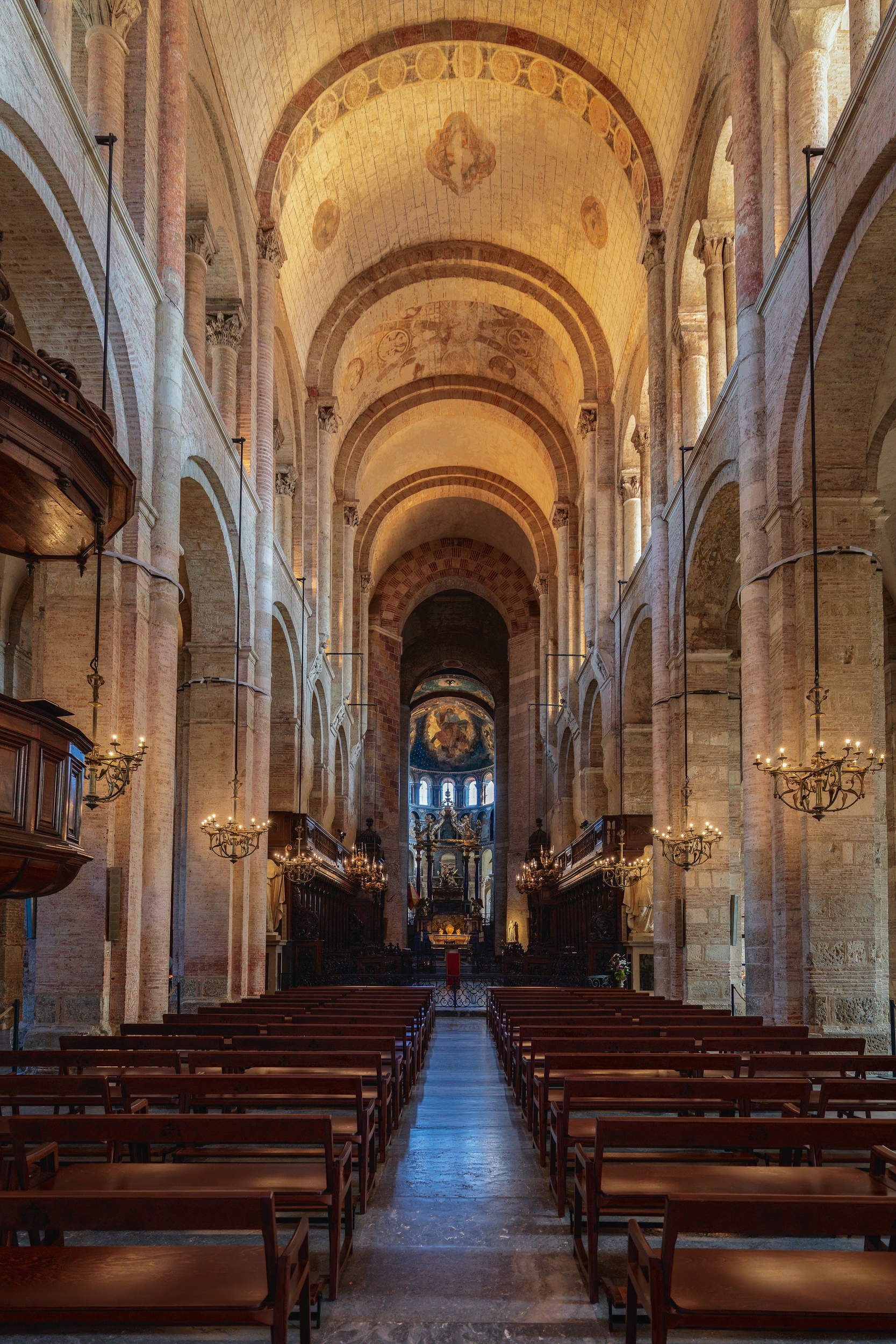
Basilique Saint-Sernin, Toulouse
EN : Interior of the Basilica of Saint-Sernin in Toulouse, one of the largest Romanesque churches in Europe and a major stop on the medieval pilgrimage route to Santiago de Compostela. Its vast nave, with soaring arches and frescoed ceilings, reflects the grandeur of 11th–12th century architecture.
FR : Intérieur de la basilique Saint-Sernin à Toulouse, l’une des plus grandes églises romanes d’Europe et une étape majeure sur le chemin de Saint-Jacques-de-Compostelle. Sa vaste nef, aux arcs élancés et aux voûtes peintes, témoigne de la grandeur de l’architecture des XIᵉ–XIIᵉ siècles.
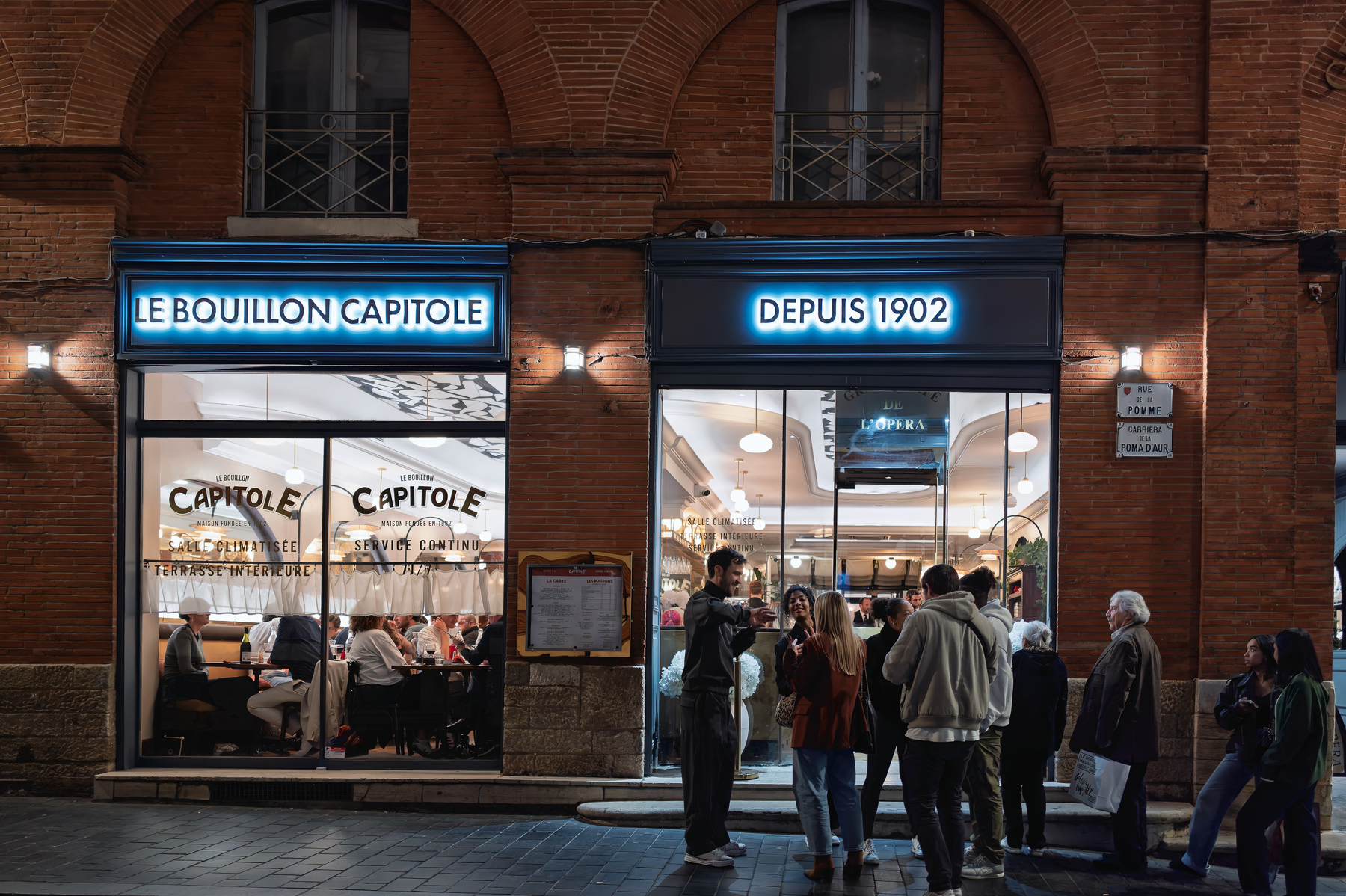
Le Bouillon Capitole, Toulouse — A Century of Shared Tables
EN: Founded in 1902, Le Bouillon Capitole is a Toulouse institution. Located on Rue de la Pomme, just steps from Place du Capitole, the restaurant continues the Parisian “bouillon” tradition of offering simple, hearty dishes at democratic prices. Its glowing façade and bustling interior have made it a landmark of conviviality for more than a century, where students, families, and visitors alike gather to share a meal.
FR : Fondé en 1902, Le Bouillon Capitole est une véritable institution toulousaine. Situé rue de la Pomme, à deux pas de la place du Capitole, il perpétue la tradition parisienne des “bouillons”, proposant une cuisine généreuse à prix accessibles. Sa façade lumineuse et son ambiance animée en font depuis plus d’un siècle un lieu emblématique de convivialité, où étudiants, familles et voyageurs se retrouvent pour partager un repas.
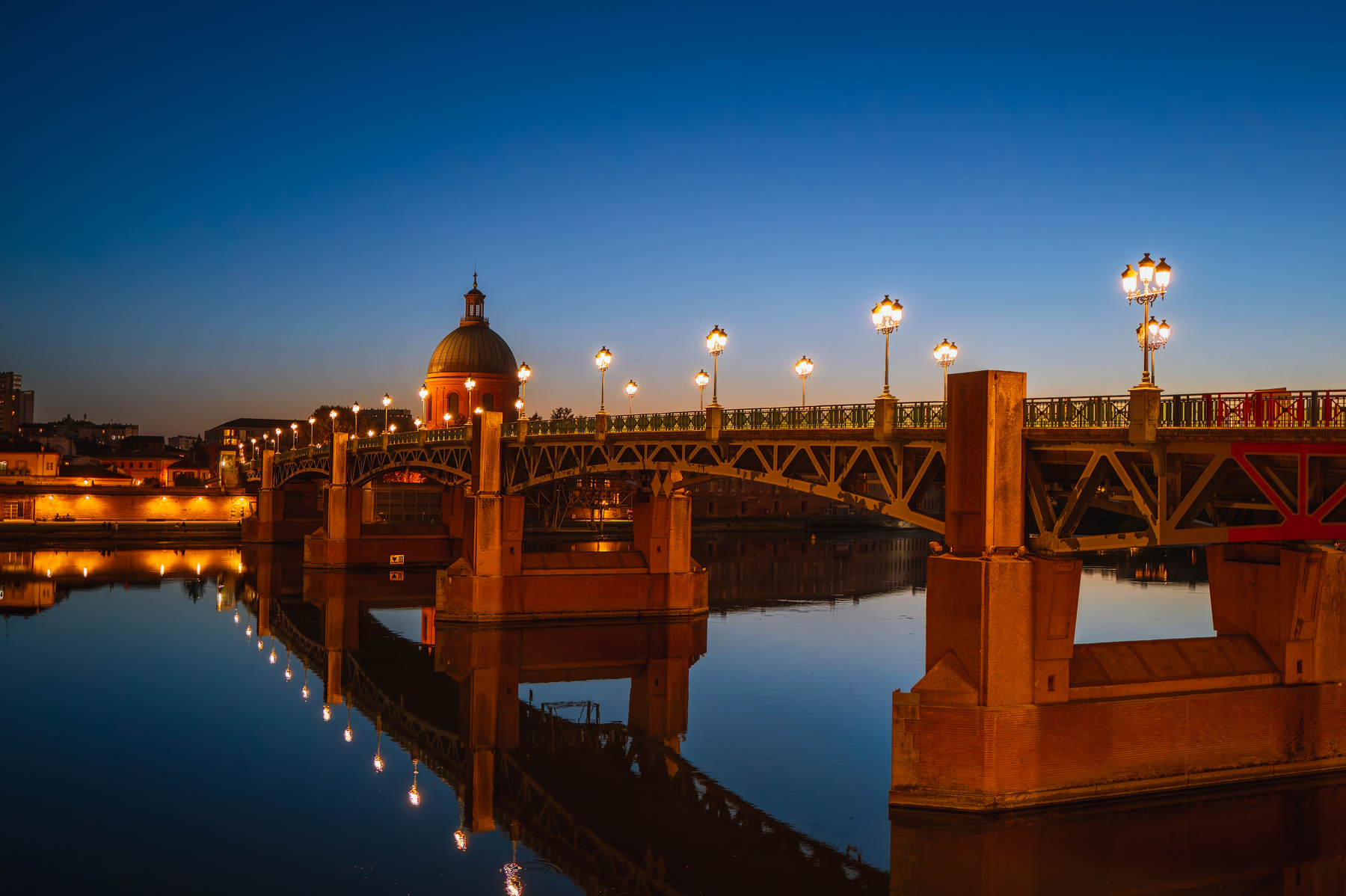
Pont Saint-Pierre and the Dome of La Grave at Blue Hour
EN: The Pont Saint-Pierre spans the Garonne in Toulouse, linking the city center to the left bank. In the background stands the Dome of La Grave, part of the former hospital founded in the 12th century. The bridge itself, rebuilt in 1987, has become one of the city’s most photographed landmarks, especially at sunset and blue hour.
FR : Le Pont Saint-Pierre traverse la Garonne à Toulouse, reliant le centre-ville à la rive gauche. En arrière-plan s’élève le Dôme de La Grave, vestige de l’ancien hôpital fondé au XIIᵉ siècle. Le pont actuel, reconstruit en 1987, est devenu l’un des lieux les plus photographiés de la ville, notamment au coucher du soleil et à l’heure bleue.
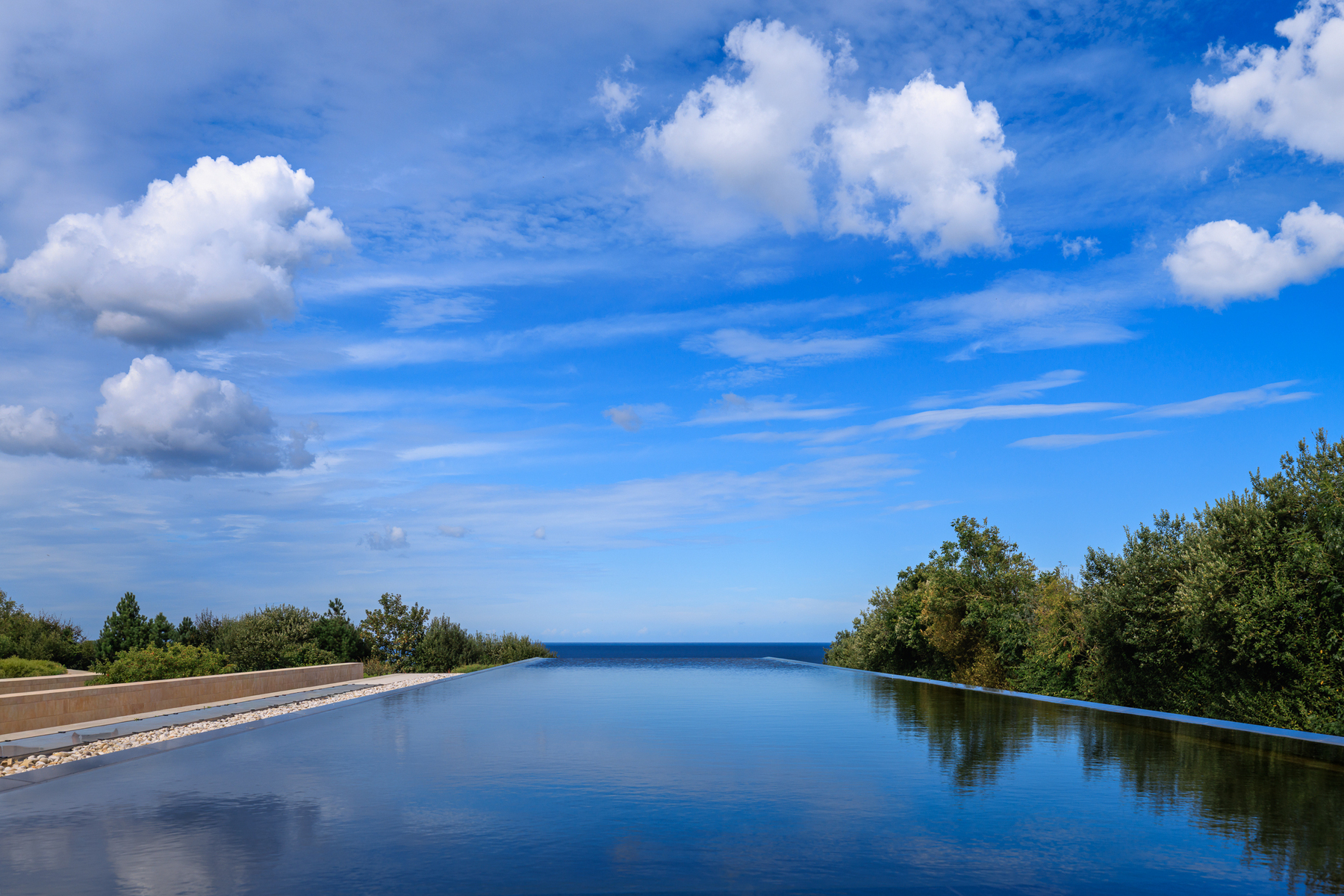
The Reflecting Pool at the Normandy American Cemetery and Memorial, Colleville-sur-Mer, 2025
EN: Part of a memorial complex designed by the Philadelphia firm Harbeson, Hough, Livingston & Larson (H2L2) with landscape architect Markley Stevenson for the American Battle Monuments Commission, the cemetery was dedicated on July 18, 1956. The pool stretches toward the horizon, linking sky and sea with the final resting place of more than 9,000 American service members who died during the D-Day landings and the Battle of Normandy. Its still surface invites quiet reflection, a fitting symbol of remembrance in this hallowed ground overlooking Omaha Beach.
FR: Faisant partie d’un complexe commémoratif conçu par le cabinet d’architectes Harbeson, Hough, Livingston & Larson (H2L2) de Philadelphie avec l’architecte paysagiste Markley Stevenson pour l’American Battle Monuments Commission, le cimetière a été inauguré le 18 juillet 1956. Le bassin s’étend vers l’horizon, reliant le ciel et la mer au lieu de repos de plus de 9 000 soldats américains tombés lors du Débarquement et de la bataille de Normandie. Sa surface immobile invite au recueillement, symbole approprié du souvenir dans ce lieu sacré qui surplombe Omaha Beach.
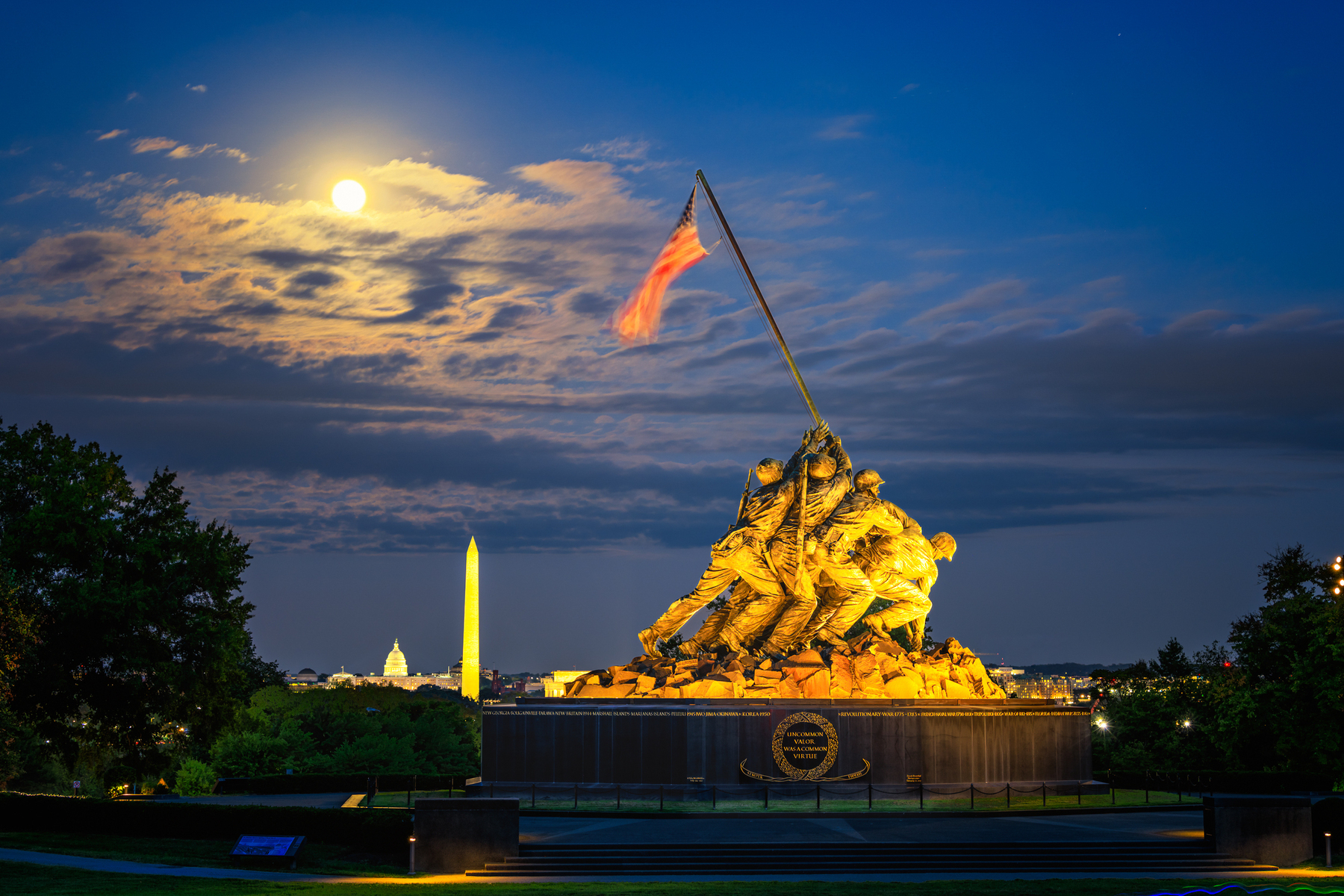
Harvest Moon Over the Iwo Jima Memorial, 2025
The October 2025 Harvest Moon rises over Arlington’s Marine Corps War Memorial, its glow breaking through clouds above the illuminated bronze figures of the Iwo Jima flag raising. In the distance, the Washington Monument and U.S. Capitol shine in alignment — a solemn reminder of sacrifice framed against the nation’s capital.
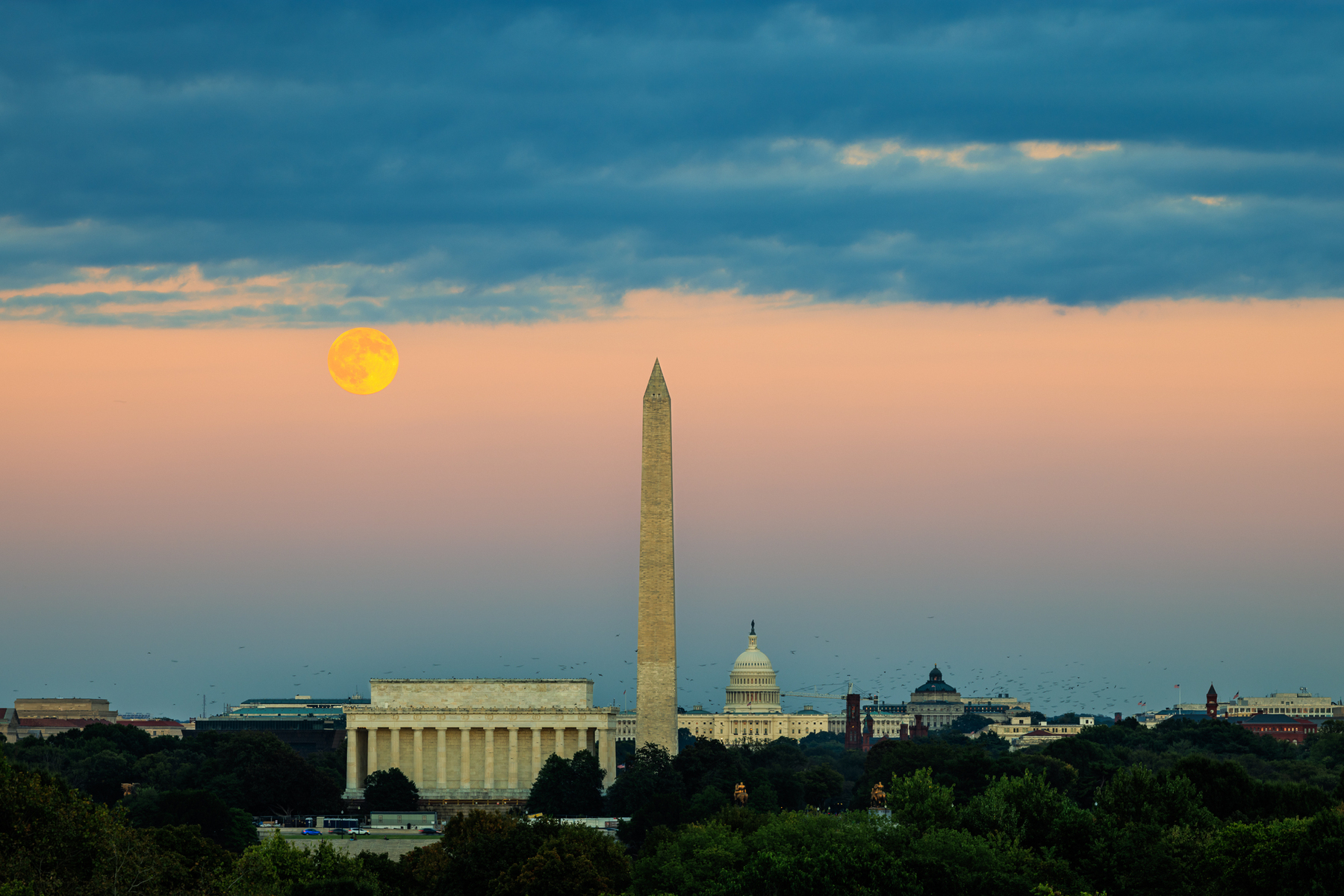
Harvest Moonrise Over Washington, October 6, 2025
The October 2025 Harvest Moon rises above Washington, D.C., glowing unusually large as it lifts into the pastel sky at twilight. From this vantage point, the Lincoln Memorial, Washington Monument, and U.S. Capitol align in a classic view of the National Mall, with the full moon appearing oversized on the horizon — a visual effect created by atmospheric perspective at moonrise.
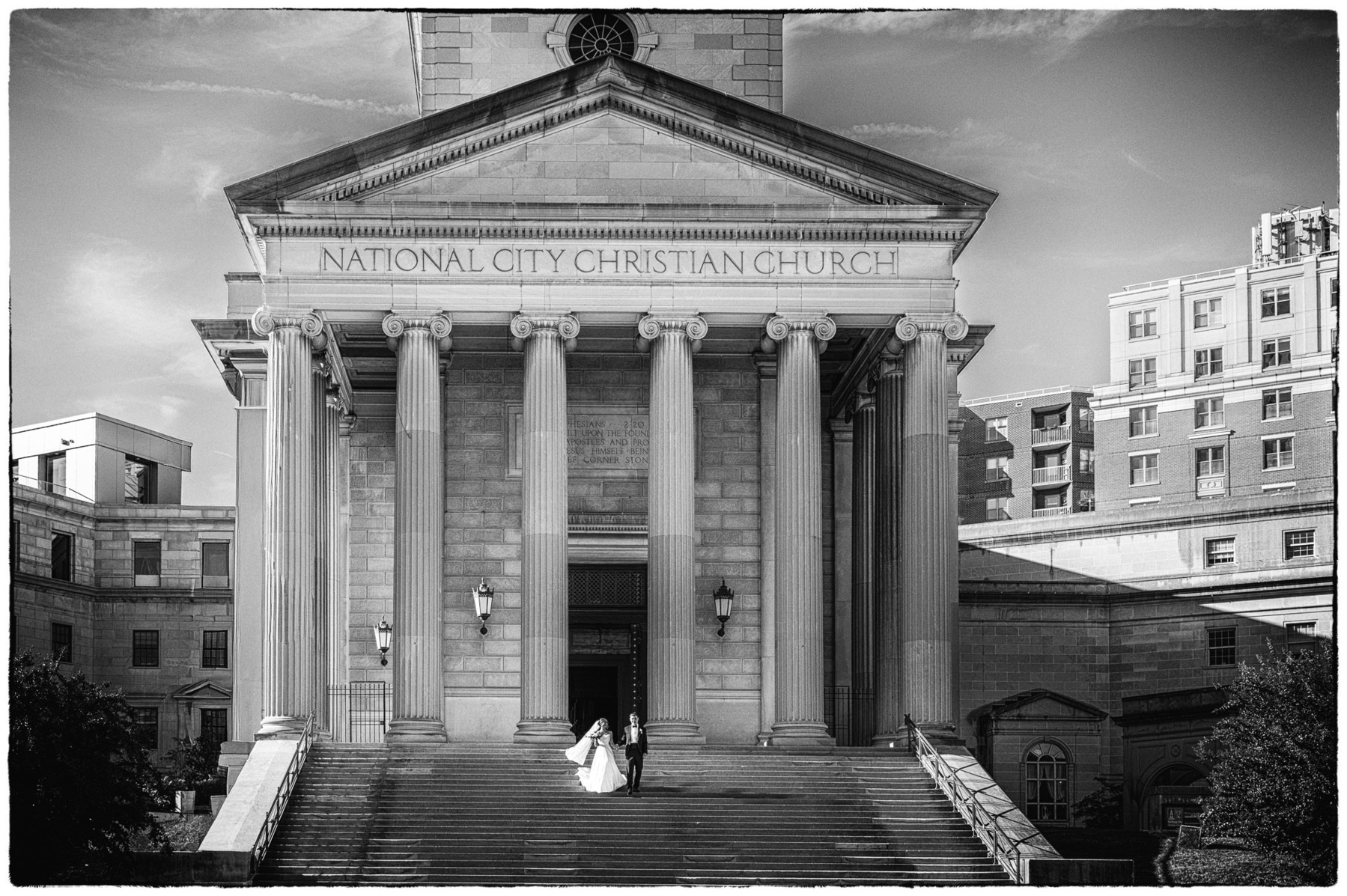
Wedding at National City Christian Church, Washington, DC, 2025
Beneath the towering columns of National City Christian Church, a wedding couple steps into the light. Designed by John Russell Pope, architect of the Jefferson Memorial, the neoclassical grandeur becomes a stage where history and intimacy meet.
Exploring the Centre Pompidou, Paris
Exploring the Centre Pompidou — bold architecture, a vibrant plaza, and rooftop views over Paris — and how it became a place I came to love (2012–2025).
When Will I See You Again?
The Centre Pompidou in Paris closed in 2025 for a five-year renovation to address safety and modernization needs.
Notre-Dame Reborn
Notre-Dame has reopened, five years after the devastating fire. When I stepped inside on my recent trip to Paris, I saw not scars but renewal — a cathedral more luminous than I remembered.
Maison Européenne de la Photographie, Paris
Just published: Maison Européenne de la Photographie: A Home for Photography — my walk through the MEP in Paris and the Marie-Laure de Decker exhibition. Her black-and-white work held me still: film grain, quiet strength, and moments that linger. More than photos, this is about presence and seeing.
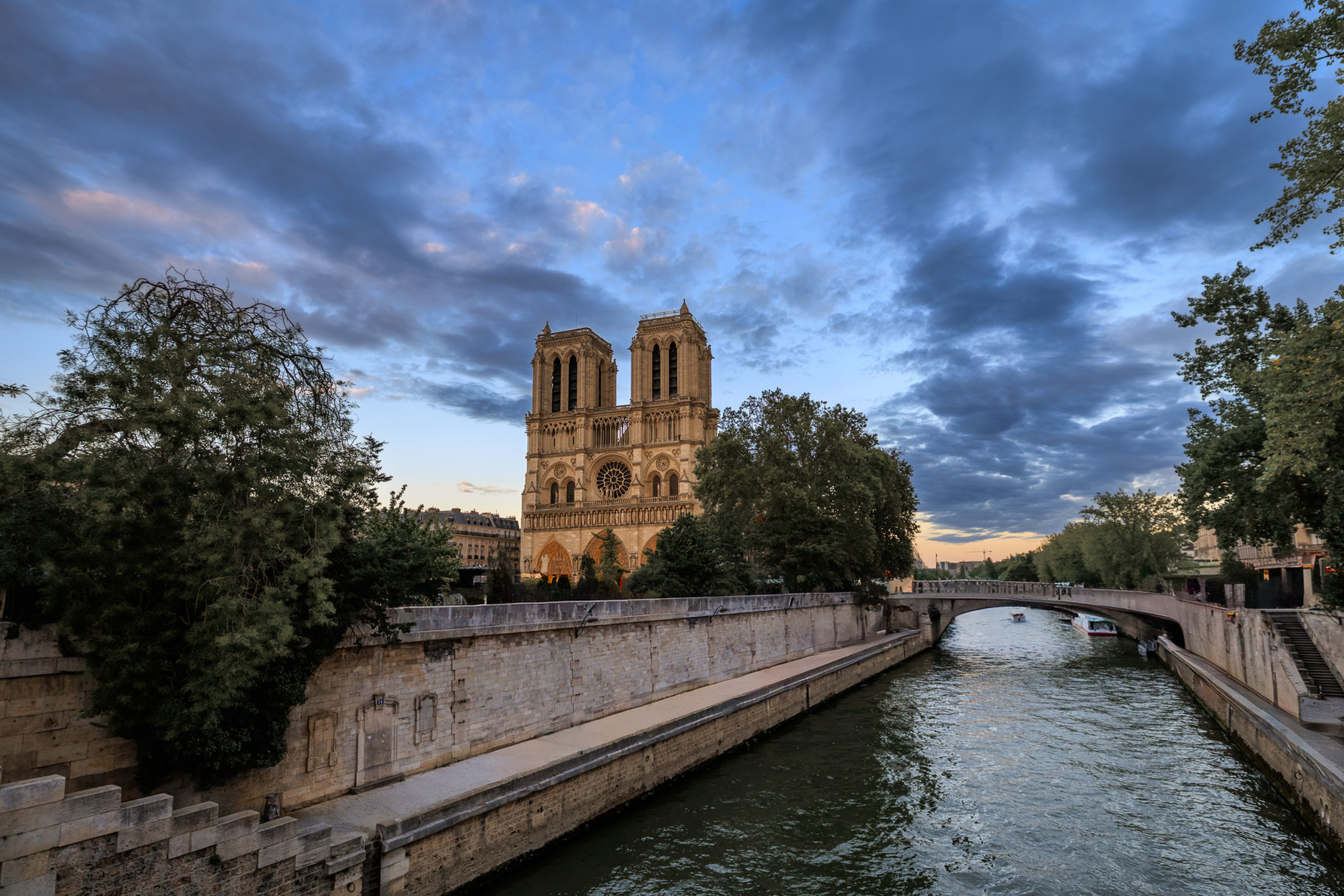
Notre-Dame, Paris, 2025
EN: Notre-Dame at dusk, glowing above the Seine as the city settles into evening — timeless, serene, and unshaken.
FR: Notre-Dame au crépuscule, se reflétant sur la Seine tandis que la ville s’apaise — intemporelle, sereine, inébranlable.
Paris – La maison qui penche à Montmartre
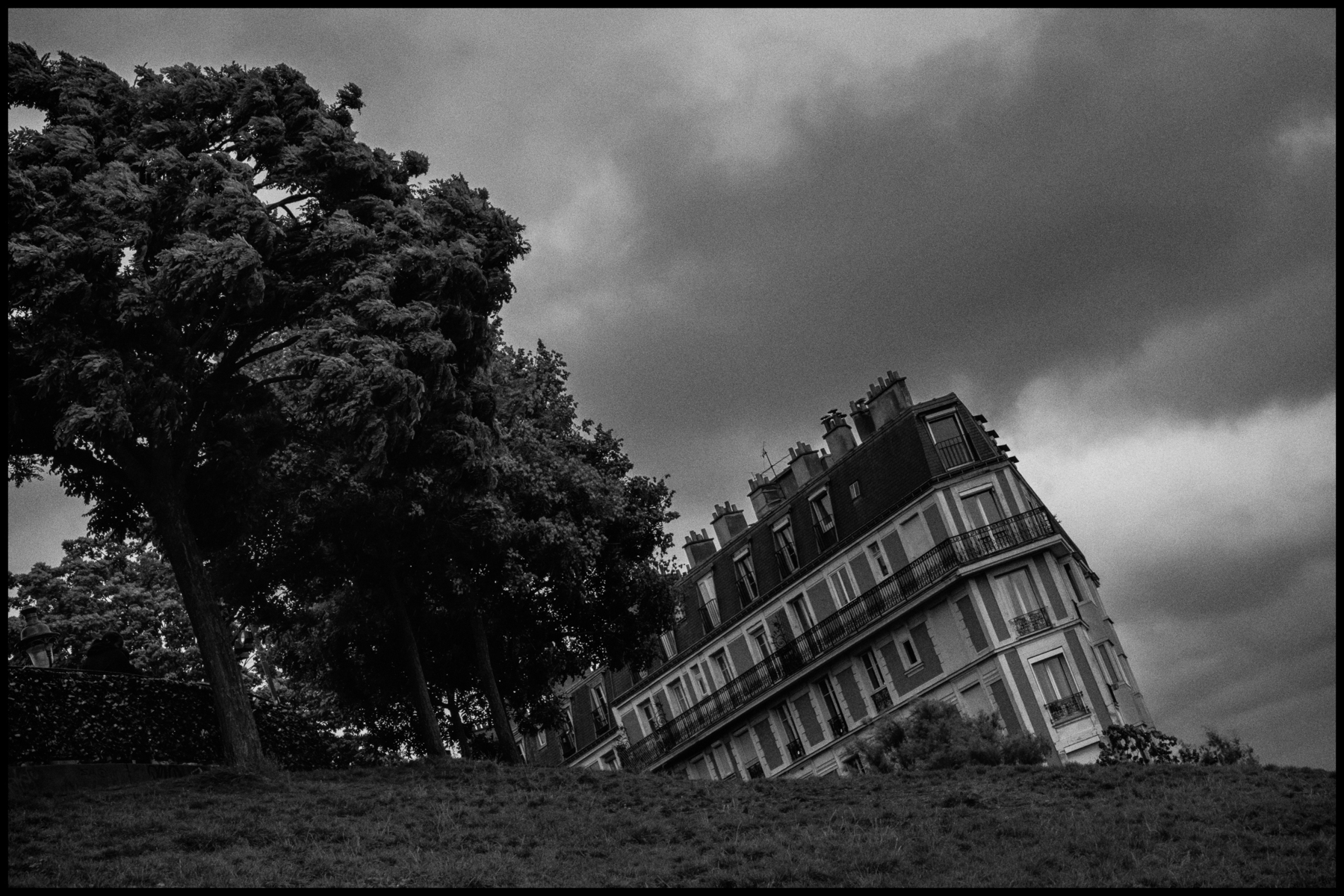
FR : À Montmartre, près du Sacré-Cœur, cette illusion d’optique fait croire que l’immeuble bascule. En réalité, c’est la butte qui est en pente — mais l’effet visuel amuse toujours les passants et les photographes.
EN : In Montmartre, near the Sacré-Cœur, this optical illusion makes the building appear to lean dramatically. In reality, it is the hillside that slopes — but the visual trick never fails to amuse both passersby and photographers.
Normandy American Cemetery, Colleville-sur-Mer
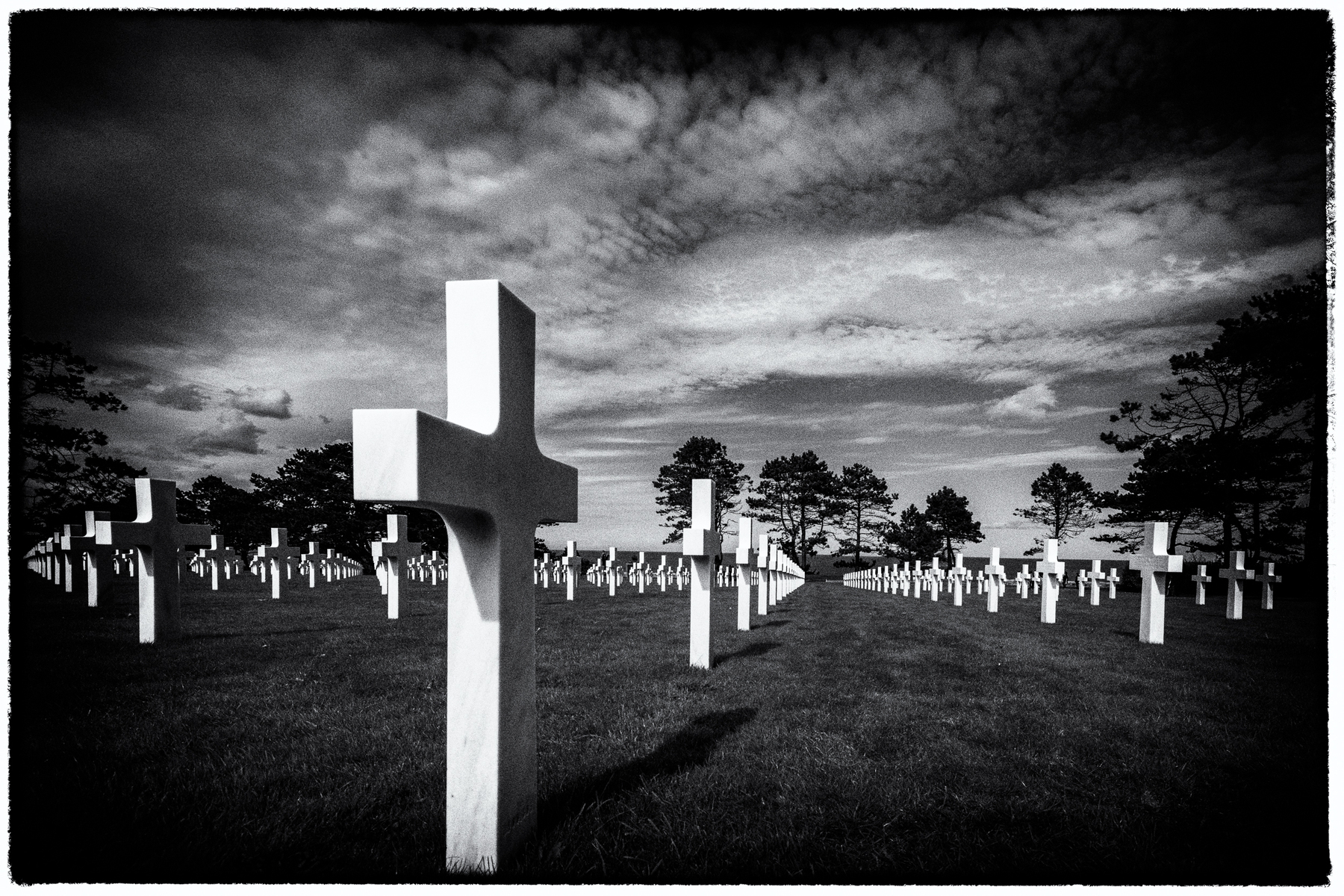
EN: The Normandy American Cemetery and Memorial at Colleville-sur-Mer overlooks Omaha Beach, where more than 9,000 American service members are buried. Row upon row of crosses and Stars of David bear silent witness to sacrifice, freedom, and memory.
FR: Le Cimetière Américain de Normandie à Colleville-sur-Mer domine Omaha Beach, où reposent plus de 9 000 soldats américains. Rangée après rangée de croix et d’étoiles de David témoignent en silence du sacrifice, de la liberté et du souvenir.
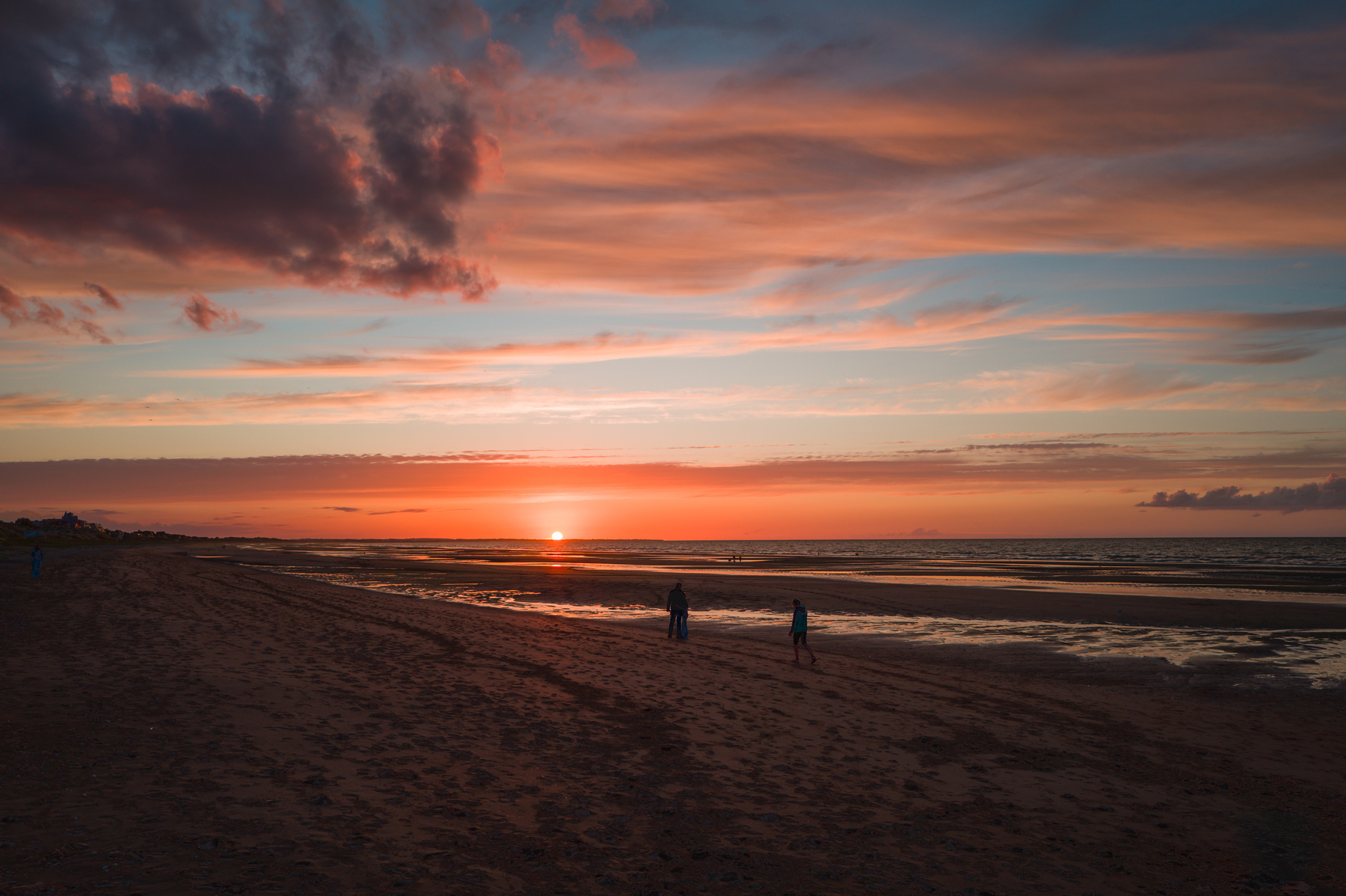
Cabourg, France
EN: The sun sinks into the horizon at Cabourg, painting the beach and sky in soft evening light.
FR: Le soleil disparaît à l’horizon de Cabourg, teintant la plage et le ciel de la douce lumière du soir.