Travel
Australia and New Zealand Photos
Some trips simply offer a change of scenery.
Others change your sense of scale entirely.
My recent time in Australia and New Zealand was the latter. Australia felt vast, ancient, and deeply grounded. New Zealand felt carved, steep, and impossibly pure. From the quiet expanse of the Outback to the exhilarating chill of the Earnslaw Burn Glacier, the juxtapositions were profound.
I have finally finished going through the frames.
The galleries are now live:
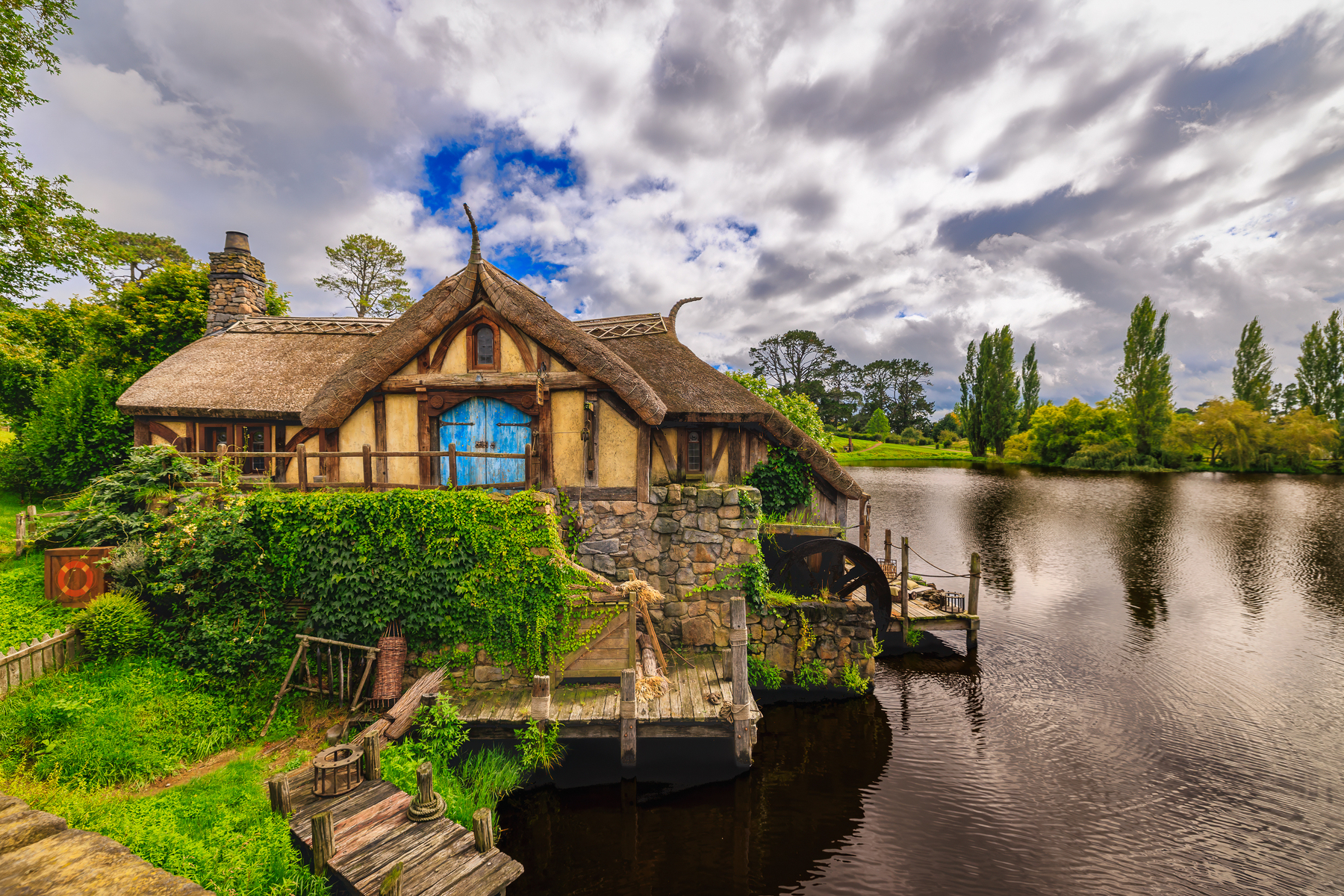
The Mill at Hobbiton — Where Fiction Took Root
I made this photograph at the Hobbiton Movie Set in the rural Waikato region. What began as a temporary film set for The Lord of the Rings was rebuilt permanently after the global success of the films and later expanded for The Hobbit.
The mill and waterwheel were constructed to give depth and movement to the fictional village of the Shire. Today, they stand not as relics of cinema, but as part of New Zealand’s cultural and economic landscape. The films profoundly shaped international perceptions of the country, linking its rolling farmland and dramatic scenery to Middle-earth in the global imagination.
Hobbiton is undeniably curated — every blade of grass feels intentional — yet it sits within authentic pastoral countryside. It is a place where fiction and landscape intersect, and where storytelling has left a permanent mark on the land.
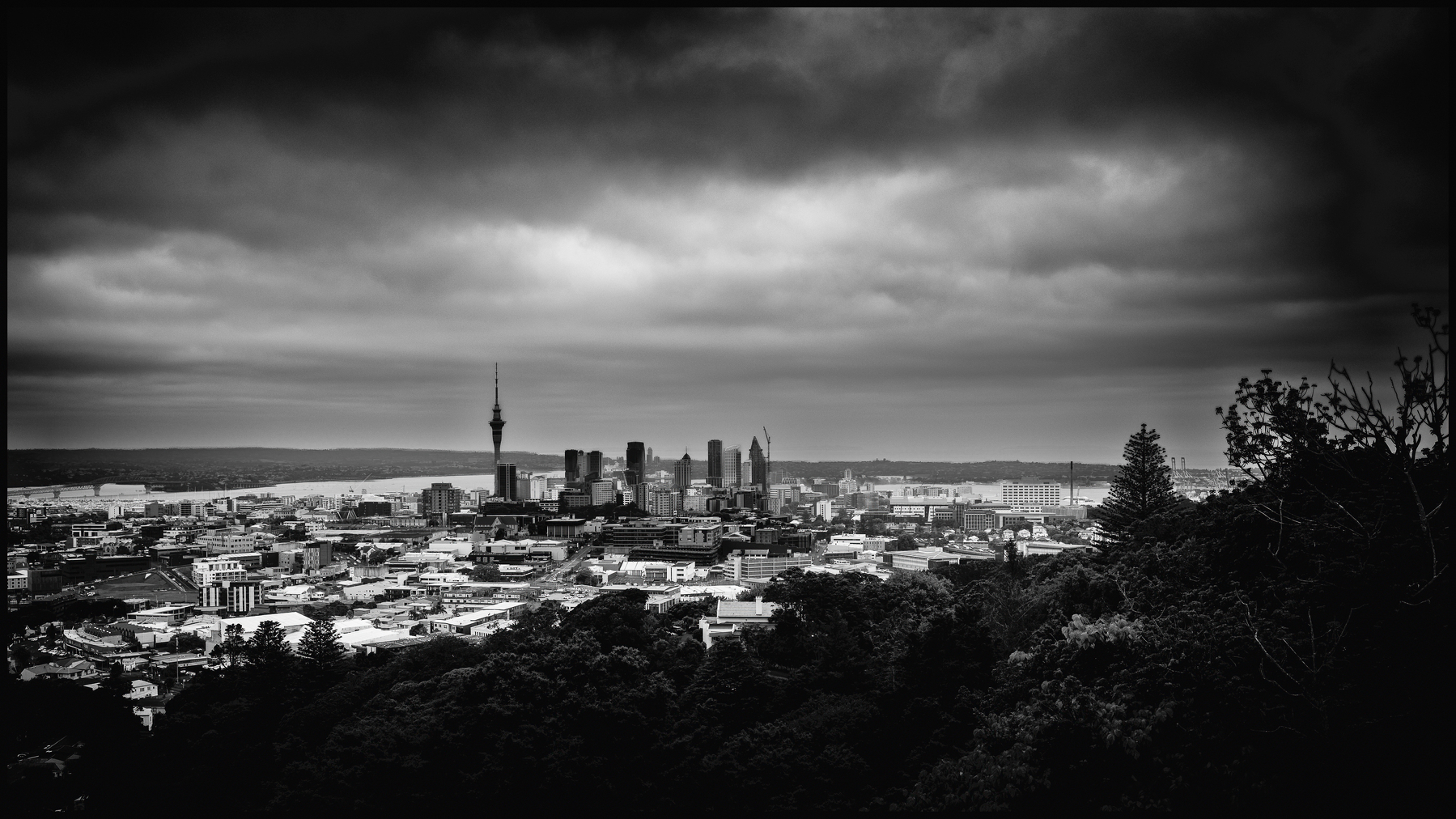
Auckland from Maungawhau
Auckland’s skyline seen from Maungawhau (Mount Eden), one of the city’s most prominent volcanic cones.
Maungawhau rises approximately 196 meters (643 feet) above sea level and is the highest natural point on the Auckland isthmus. It is part of the Auckland Volcanic Field, a collection of more than 50 volcanic cones formed over the past 200,000 years. The summit crater, roughly 50 meters deep, remains clearly visible and is considered sacred to Māori.
Long before European settlement, Maungawhau was the site of a fortified Māori pā (village). Terraces carved into the slopes for housing and food storage are still visible today, marking it as an important ancestral and defensive site. The name Maungawhau translates roughly as “mountain of the whau tree.”
From its summit, one can see much of Tāmaki Makaurau (the Māori name for Auckland), including the Waitematā Harbour to the north, the Manukau Harbour to the south, and the modern skyline anchored by the Sky Tower. The view reveals Auckland’s geography clearly: a city built across narrow land between two harbours, shaped by volcanic origins and maritime access.
Today, Maungawhau remains both a public park and a culturally significant site, offering one of the most comprehensive vantage points over New Zealand’s largest city.
Queenstown at Sunset, Lake Wakatipu
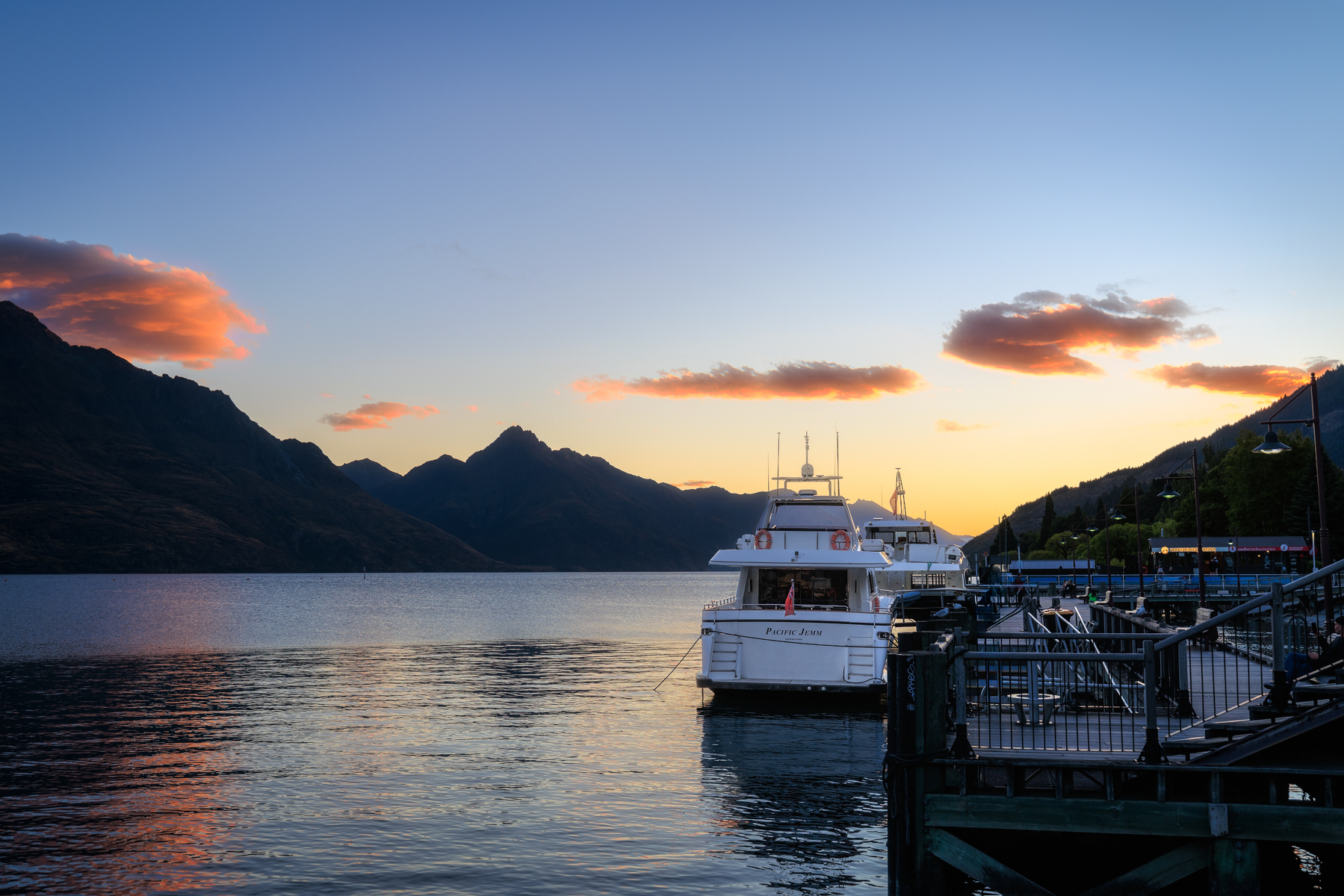
As the sun slipped behind the Remarkables, the water of Lake Wakatipu settled into evening calm. Boats rested at the pier, mountains fell into silhouette, and the last light lingered quietly over Queenstown—less spectacle, more pause.
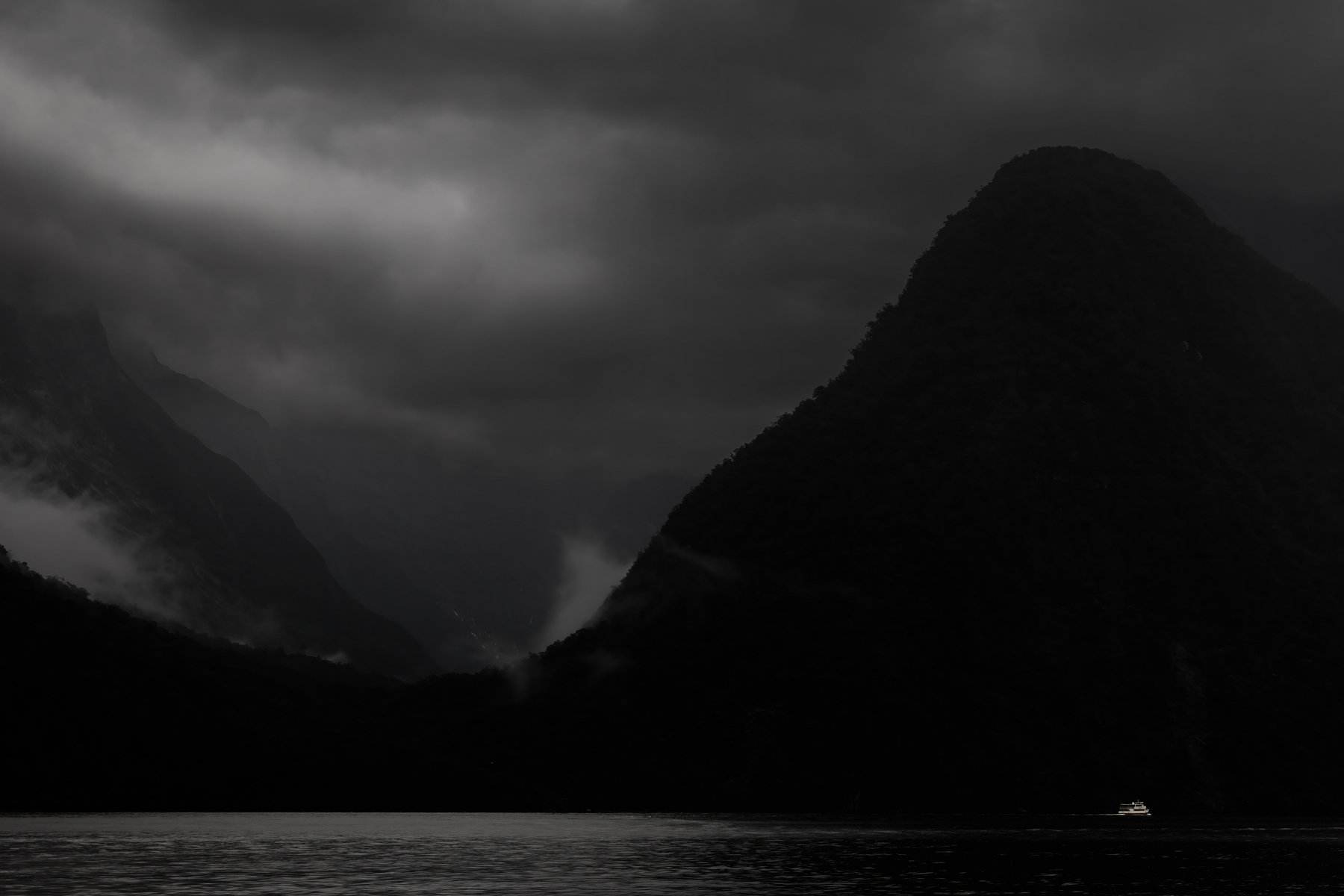
Milford Sound, Passing Light, New Zealand
Milford Sound / Piopiotahi lies on the southwest coast of New Zealand’s South Island within Fiordland National Park. A fiord carved by glaciers during the last ice age and later flooded by the Tasman Sea, it is defined as much by weather as by geology. Low cloud, heavy rain, and brief breaks in light shape how the landscape is seen—and often how little of it is revealed. Here, a tour vessel moves through deep water beneath steep, forested walls, offering a sense of scale within a place that resists clarity.
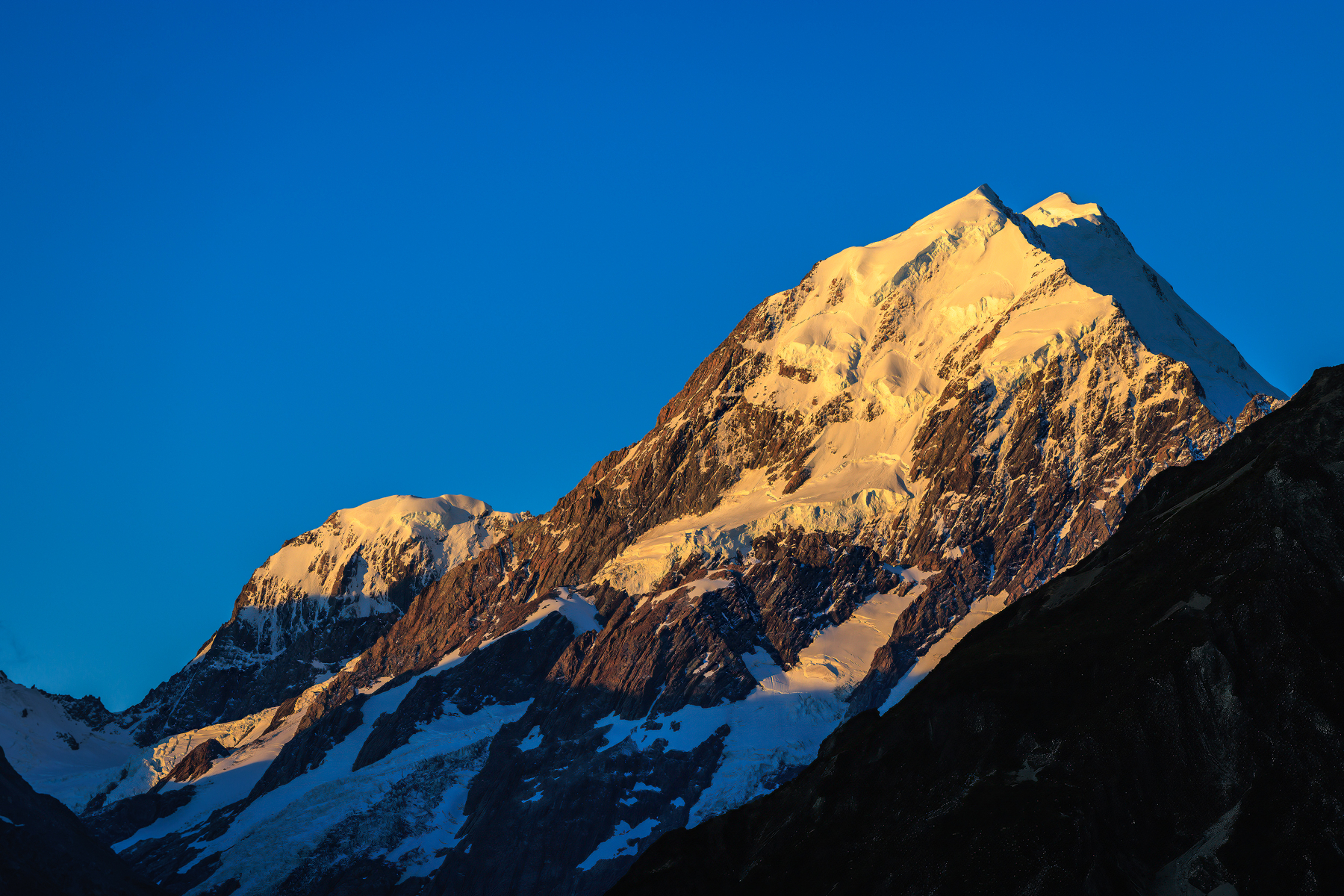
Alpenglow on Aoraki / Mount Cook
Alpenglow settles on Aoraki / Mount Cook at sunset, seen from the Hermitage Hotel in Aoraki Mount Cook National Park. Rising to 3,724 meters (12,218 feet), Aoraki is the highest mountain in New Zealand. As the sun drops, warm light briefly catches the upper snowfields while the lower slopes fall into deep blue shadow—a quiet, fleeting moment that emphasizes the mountain’s scale, structure, and stillness.
Toulouse: Light, Stone, and the Quiet Confidence of a Great City
Warm light, quiet streets, rose-colored stone — and a feeling of grace everywhere.
👉 Read the post:
www.dhescrpt.com/toulouse-…
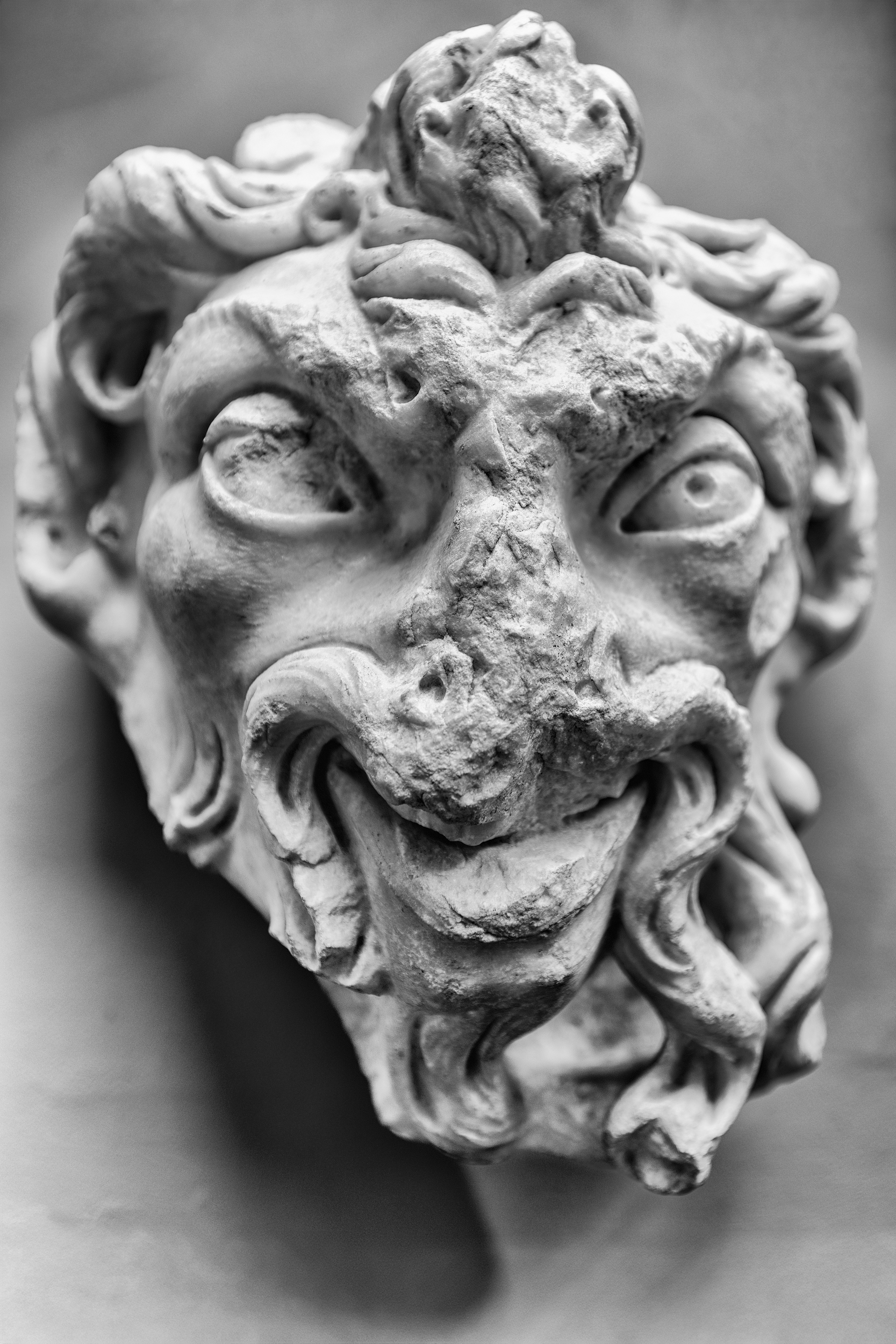
Musée Saint-Raymond, Toulouse
EN: Photographed at the Musée Saint-Raymond in Toulouse, this expressive sculpted head once adorned a Roman building or fountain. The museum, housed in a 16th-century college beside the Basilica of Saint-Sernin, is dedicated to archaeology and the ancient civilizations of southwestern France, particularly the Gallo-Roman city of Tolosa. Its collection preserves the traces of daily life, art, and belief from antiquity — reminders of how the human face and imagination endure across millennia.
FR: Photographié au Musée Saint-Raymond à Toulouse, ce visage sculpté, à l’expression à la fois ironique et troublante, ornait autrefois un édifice ou une fontaine romaine. Installé dans un ancien collège du XVIᵉ siècle, à côté de la basilique Saint-Sernin, le musée est consacré à l’archéologie et aux civilisations antiques du sud-ouest de la France, notamment à la ville gallo-romaine de Tolosa. Sa collection retrace la vie, l’art et la pensée du monde antique — témoignage de la permanence du visage humain à travers le temps.
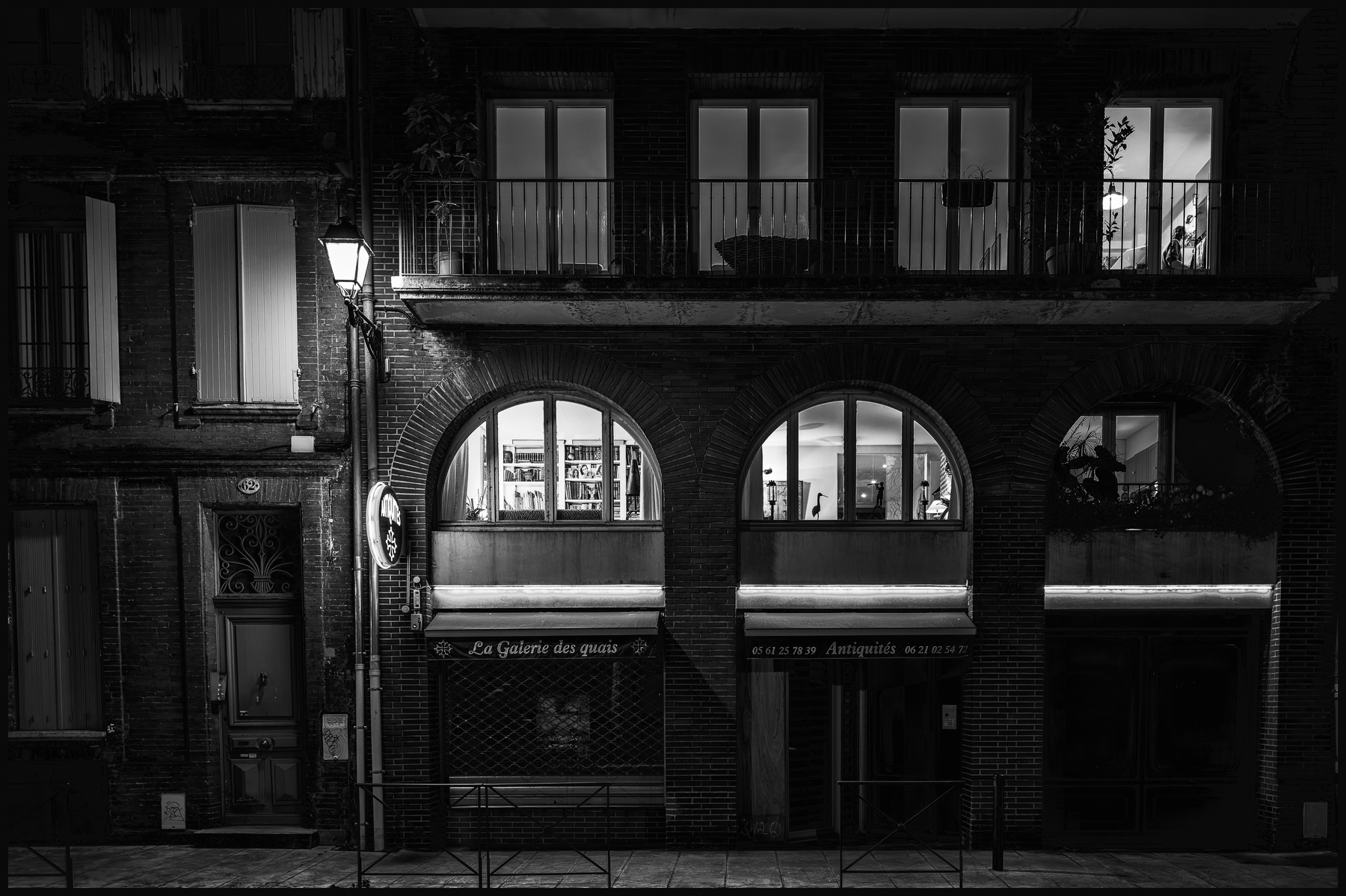
Windows of the Night – Toulouse - Fenêtres de la nuit
EN: In the quiet streets of Toulouse, the closed shops give way to illuminated windows, revealing fragments of private lives. Between darkness and light, the city tells its hidden stories.
FR: Dans les rues silencieuses de Toulouse, les boutiques closes laissent place à des fenêtres illuminées, dévoilant des fragments de vies intimes. Entre ombre et lumière, la ville raconte ses histoires cachées.
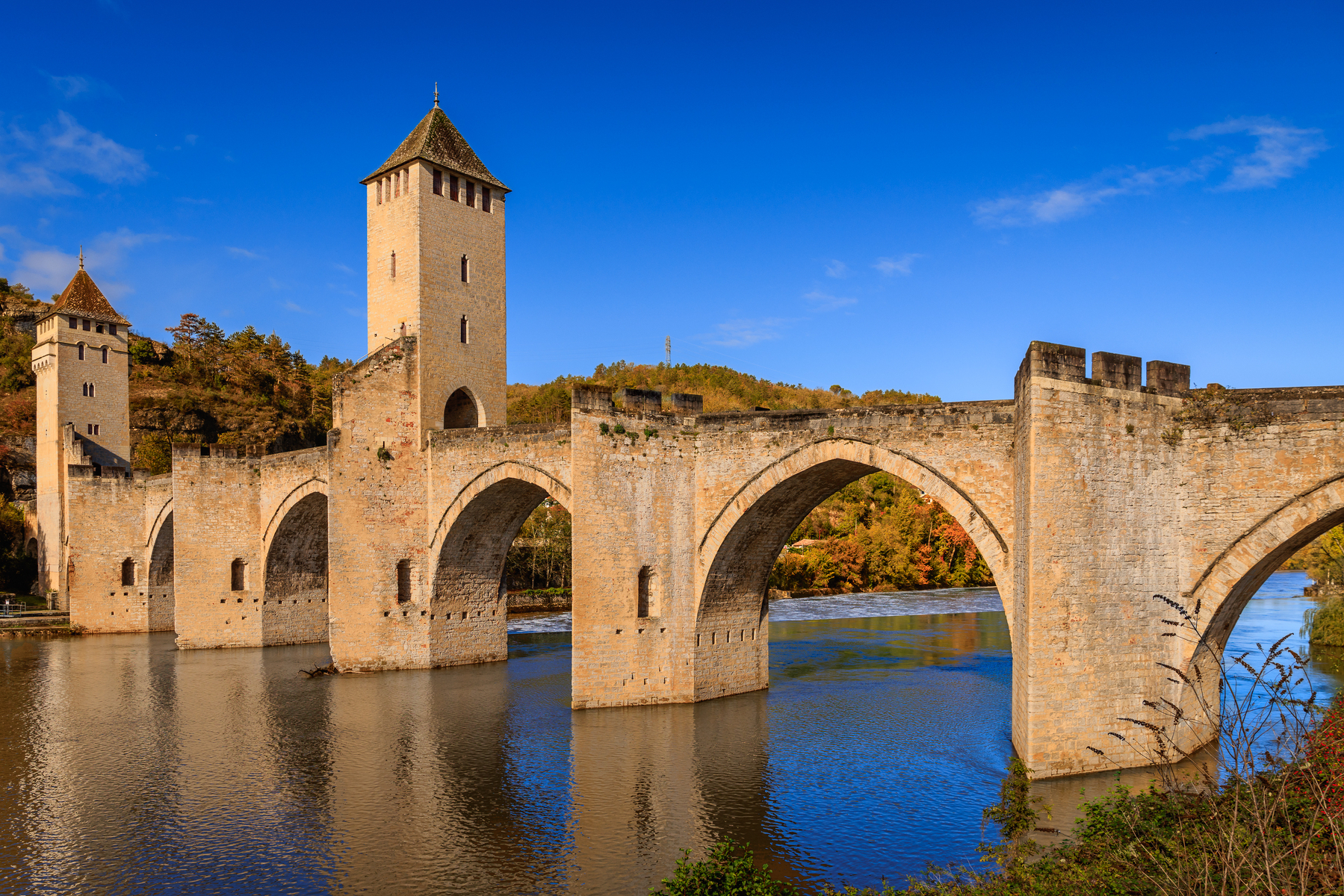
Pont Valentré, Cahors
EN: Spanning the Lot River since the 14th century, the Pont Valentré is one of France’s finest fortified medieval bridges. With its six arches and three towers, it stood as both a defensive structure and a symbol of Cahors’ prosperity. Legend tells that the architect, desperate to finish the bridge, made a pact with the Devil — a tale now inseparable from its identity.
FR: Depuis le XIVᵉ siècle, le pont Valentré enjambe le Lot et demeure l’un des plus beaux ponts fortifiés médiévaux de France. Avec ses six arches et ses trois tours, il était à la fois ouvrage défensif et symbole de la prospérité de Cahors. La légende raconte que l’architecte, désespéré de l’achever, conclut un pacte avec le diable — une histoire devenue indissociable de son identité.
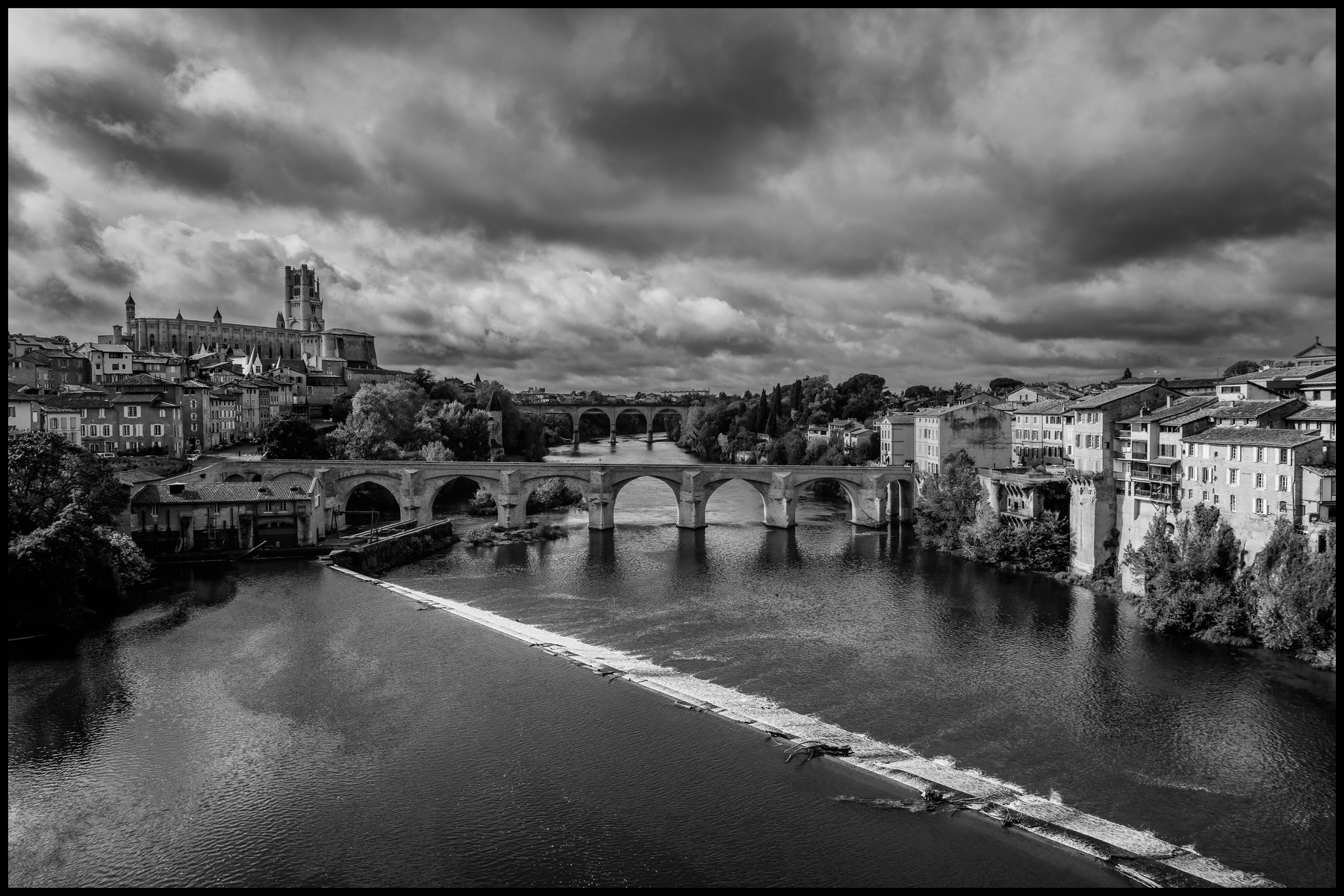
Albi, France
EN: In Albi, the Tarn flows beneath the Pont Vieux, a medieval bridge from the 11th century. Rising above the town is the Cathedral of Sainte-Cécile, the world’s largest brick cathedral and a symbol of the city’s enduring faith and history.
FR: À Albi, le Tarn s’écoule sous le Pont Vieux, pont médiéval du XIᵉ siècle. Dominant la ville, la cathédrale Sainte-Cécile, plus grande cathédrale de brique au monde, incarne la puissance et la mémoire de la cité.
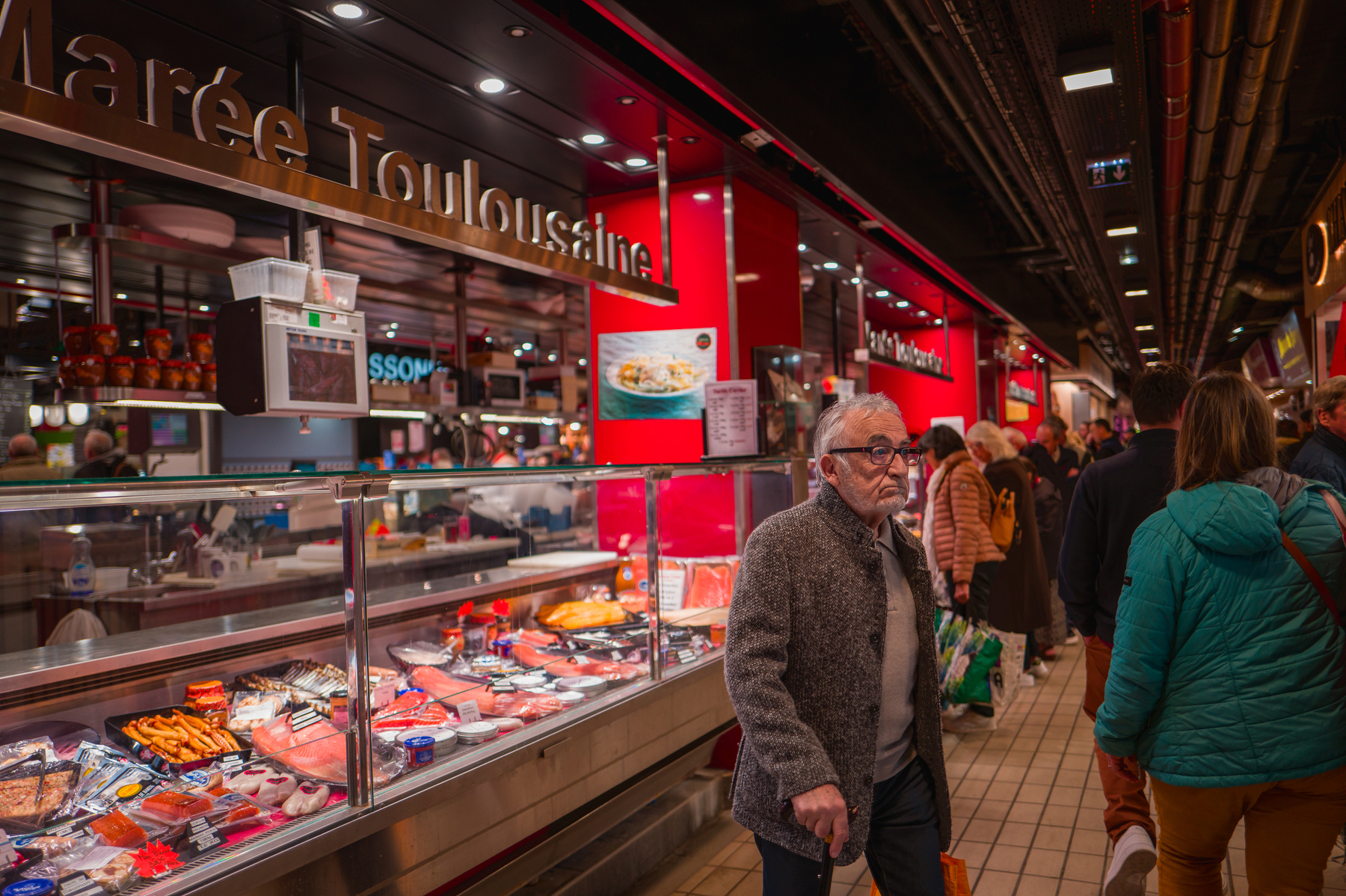
Tradition in Motion – Marché Victor Hugo, Toulouse Tradition en mouvement – Marché Victor Hugo, Toulouse
EN: Opened in 1896 and rebuilt in the 20th century, the Marché Victor Hugo remains the beating heart of Toulouse’s culinary life. Generations of vendors and customers gather here daily, weaving together tradition and modernity. With its vibrant red stalls and overflowing counters, it reflects both the city’s history and its ongoing passion for gastronomy.
FR: Ouvert en 1896 et reconstruit au XXᵉ siècle, le marché Victor Hugo demeure le cœur battant de la vie culinaire toulousaine. Depuis des générations, commerçants et clients s’y retrouvent chaque jour, mêlant tradition et modernité. Avec ses étals rouges éclatants et ses comptoirs bien garnis, il reflète à la fois l’histoire de la ville et sa passion toujours vivante pour la gastronomie.
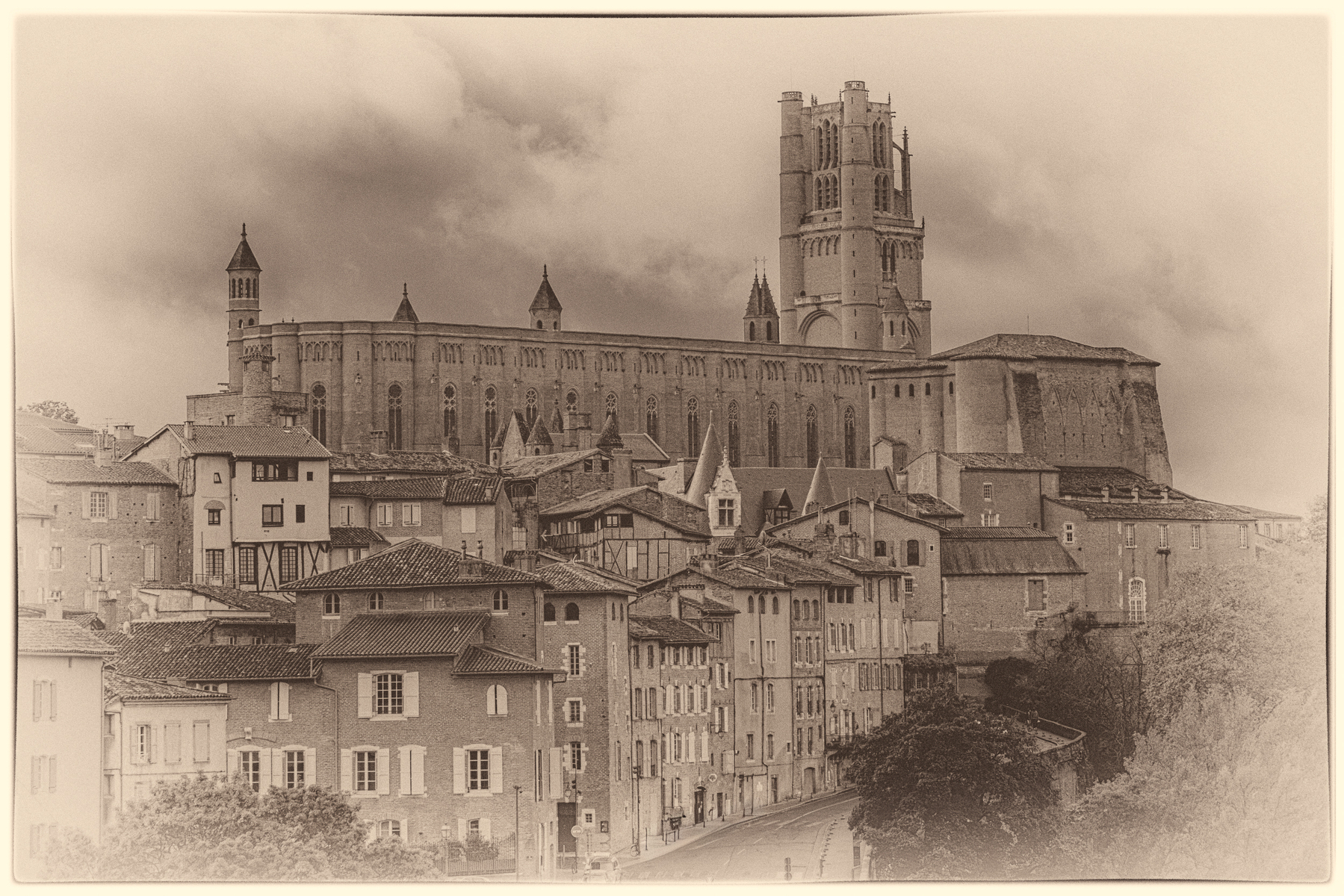
Cathédrale Sainte-Cécile – Albi
EN: The Cathedral of Sainte-Cécile rises above the old town of Albi, a masterpiece of southern Gothic architecture built entirely of brick. The sepia tones recall its enduring presence through the centuries.
FR: La cathédrale Sainte-Cécile domine la vieille ville d’Albi, chef-d’œuvre du gothique méridional entièrement construit en brique. Le ton sépia évoque sa présence immuable au fil des siècles.
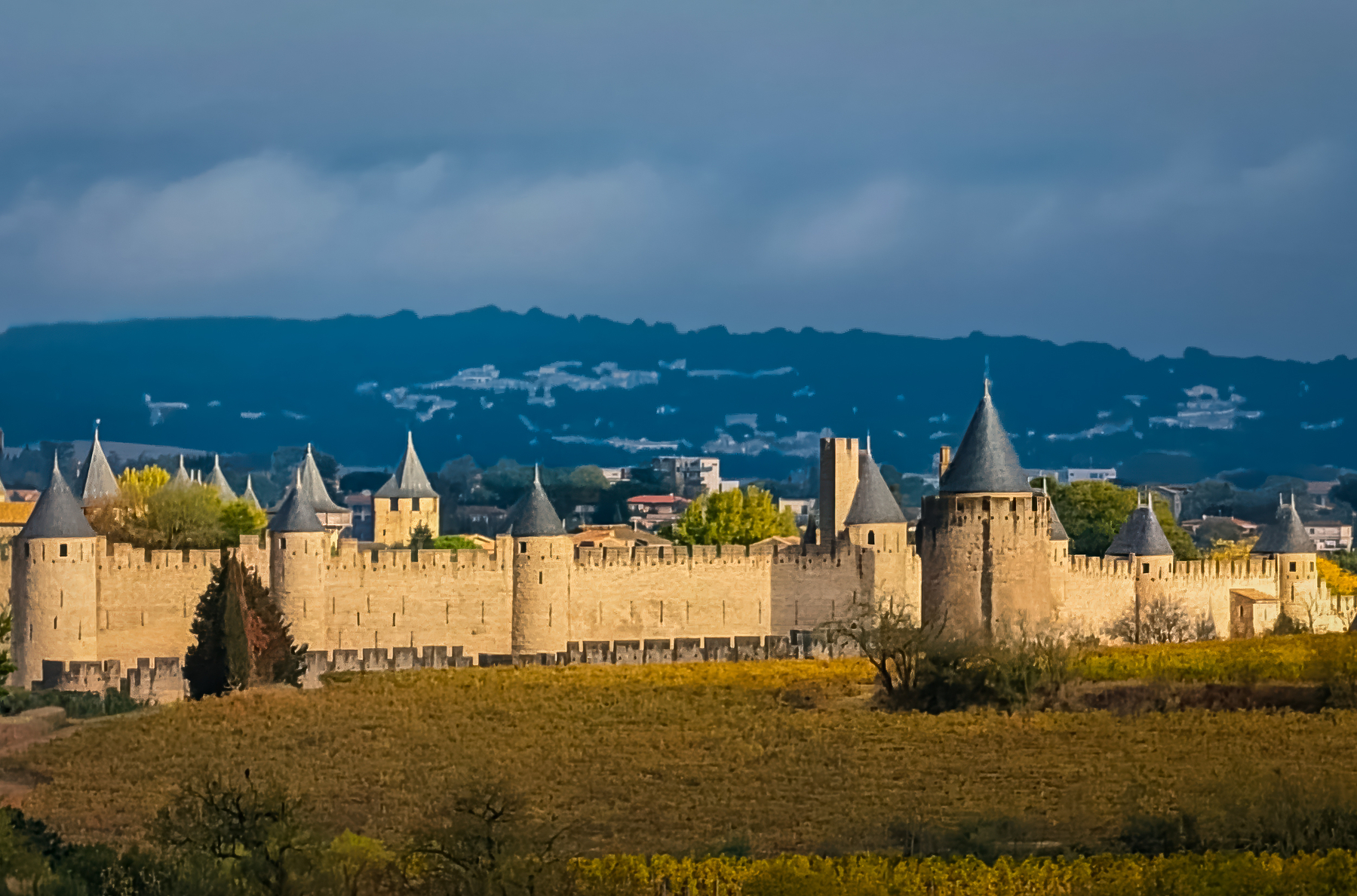
Carcassonne
EN: Carcassonne, a UNESCO World Heritage Site in southern France, is famed for its medieval double walls and 52 towers. Restored in the 19th century, the fortress rises from the landscape like a vision — stone glowing against the weight of sky, a living echo of Europe’s medieval past.
FR: Carcassonne, inscrite au patrimoine mondial de l’UNESCO dans le sud de la France, est célèbre pour sa cité médiévale fortifiée, protégée par des doubles remparts et 52 tours. Restaurée au XIXᵉ siècle, la forteresse se dresse dans le paysage telle une apparition — la pierre illuminée sous la lourdeur du ciel, résonance vivante du passé médiéval de l’Europe.
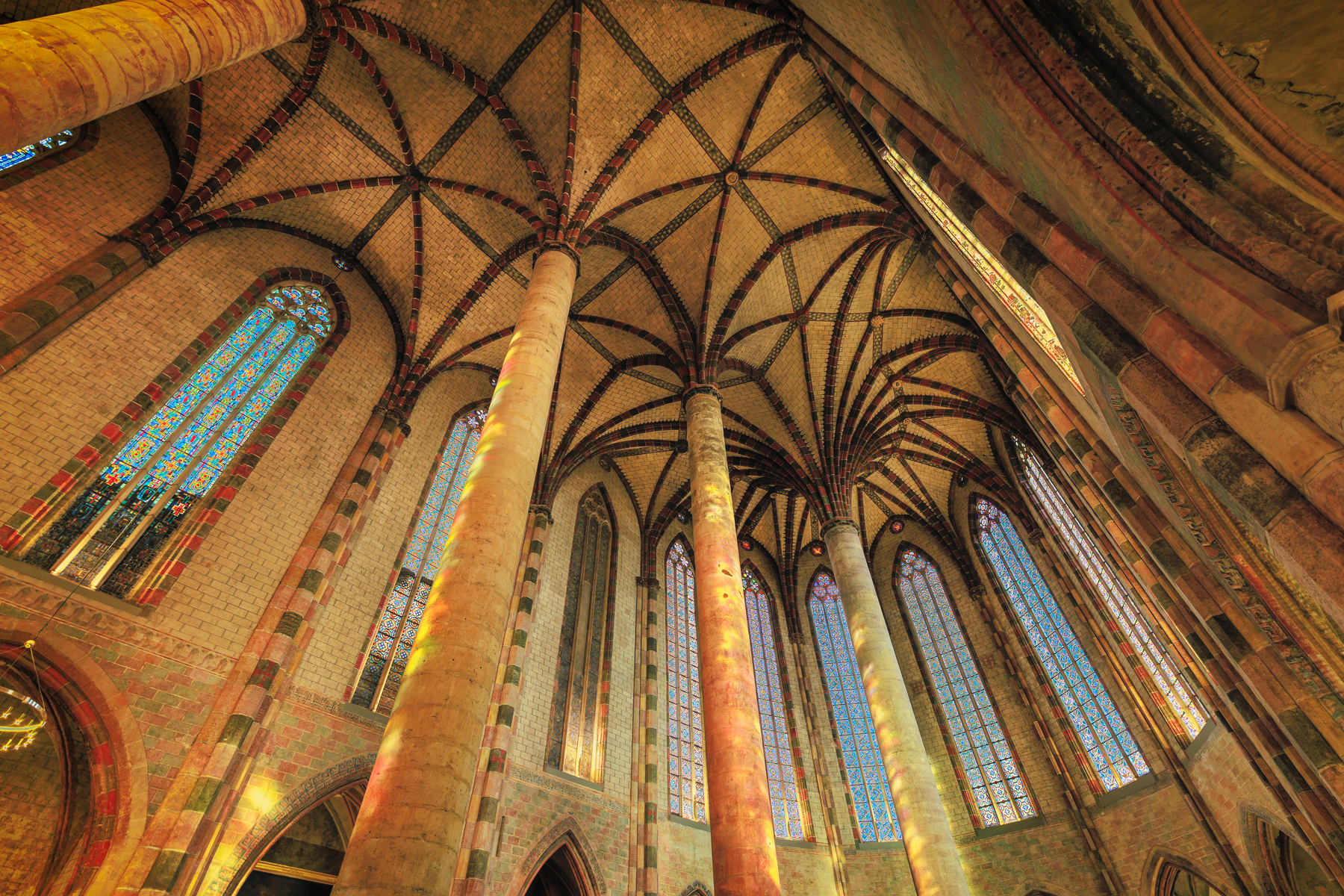
Couvent des Jacobins – Toulouse
EN: Built between 1230 and 1350, the Couvent des Jacobins in Toulouse is a masterpiece of Southern Gothic architecture. Its “palm-tree” vault and colorful stained glass transform the interior into a space where stone and light seem to breathe together.
FR: Construit entre 1230 et 1350, le Couvent des Jacobins de Toulouse est un chef-d’œuvre du gothique méridional. Sa voûte en forme de palmier et ses vitraux colorés créent une atmosphère unique où la pierre semble vibrer à la lumière du soleil couchant.
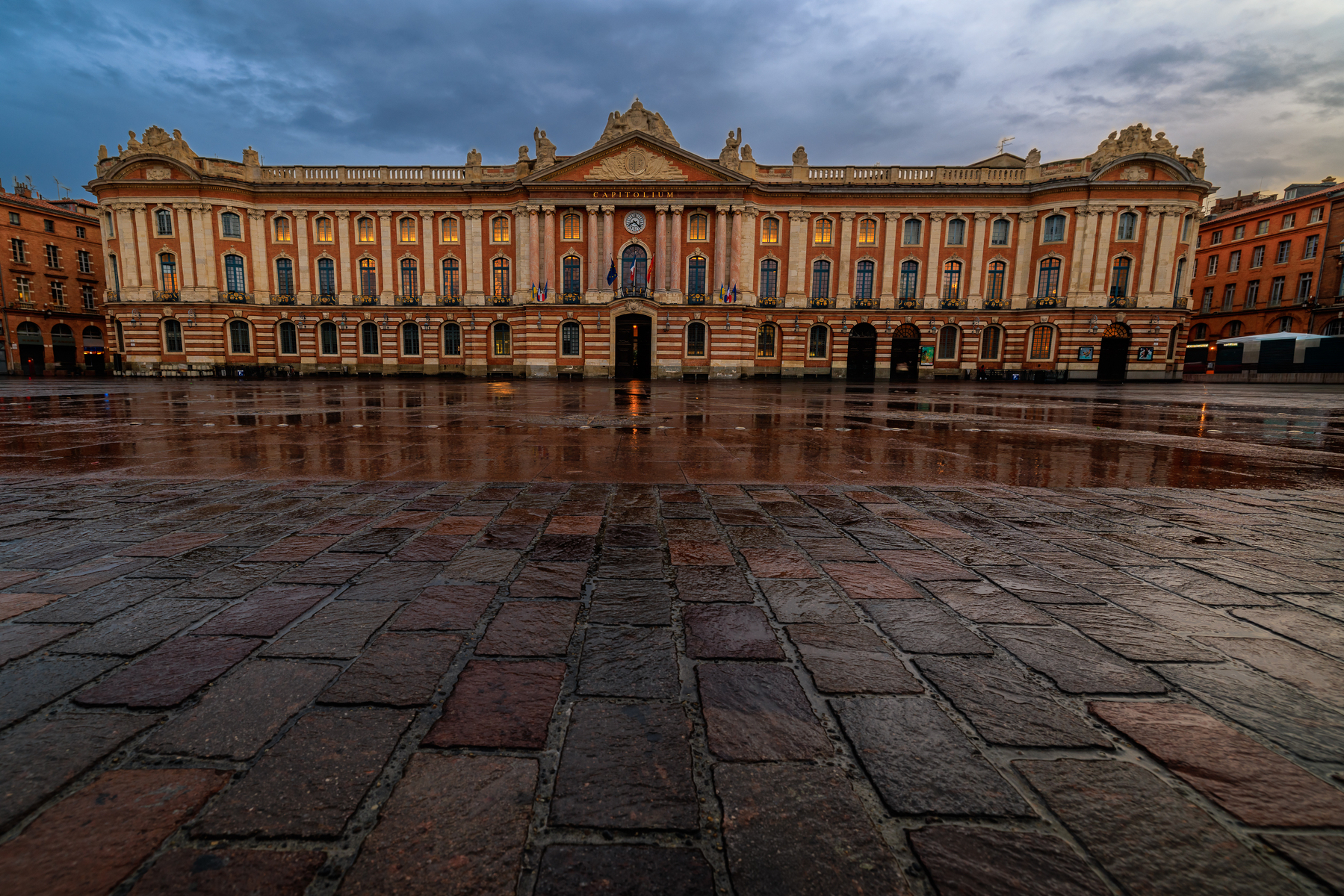
The Capitole of Toulouse - Le Capitole de Toulouse
EN: First established in the 12th century as the seat of the capitouls (municipal magistrates), the Capitole is the historic symbol of Toulouse’s civic authority. Its neoclassical brick-and-stone façade, completed in 1750, presides over the Place du Capitole. Today it houses both the city hall and the Théâtre du Capitole, uniting history, politics, and culture in the heart of the “Pink City.”
FR: Édifié à partir du XIIᵉ siècle comme siège des capitouls (magistrats municipaux), le Capitole est le symbole du pouvoir communal de Toulouse. Sa façade néoclassique en brique et pierre, achevée en 1750, domine la place du Capitole. Aujourd’hui, il abrite l’hôtel de ville et le théâtre du Capitole, mêlant histoire, politique et culture au cœur de la « Ville Rose ».
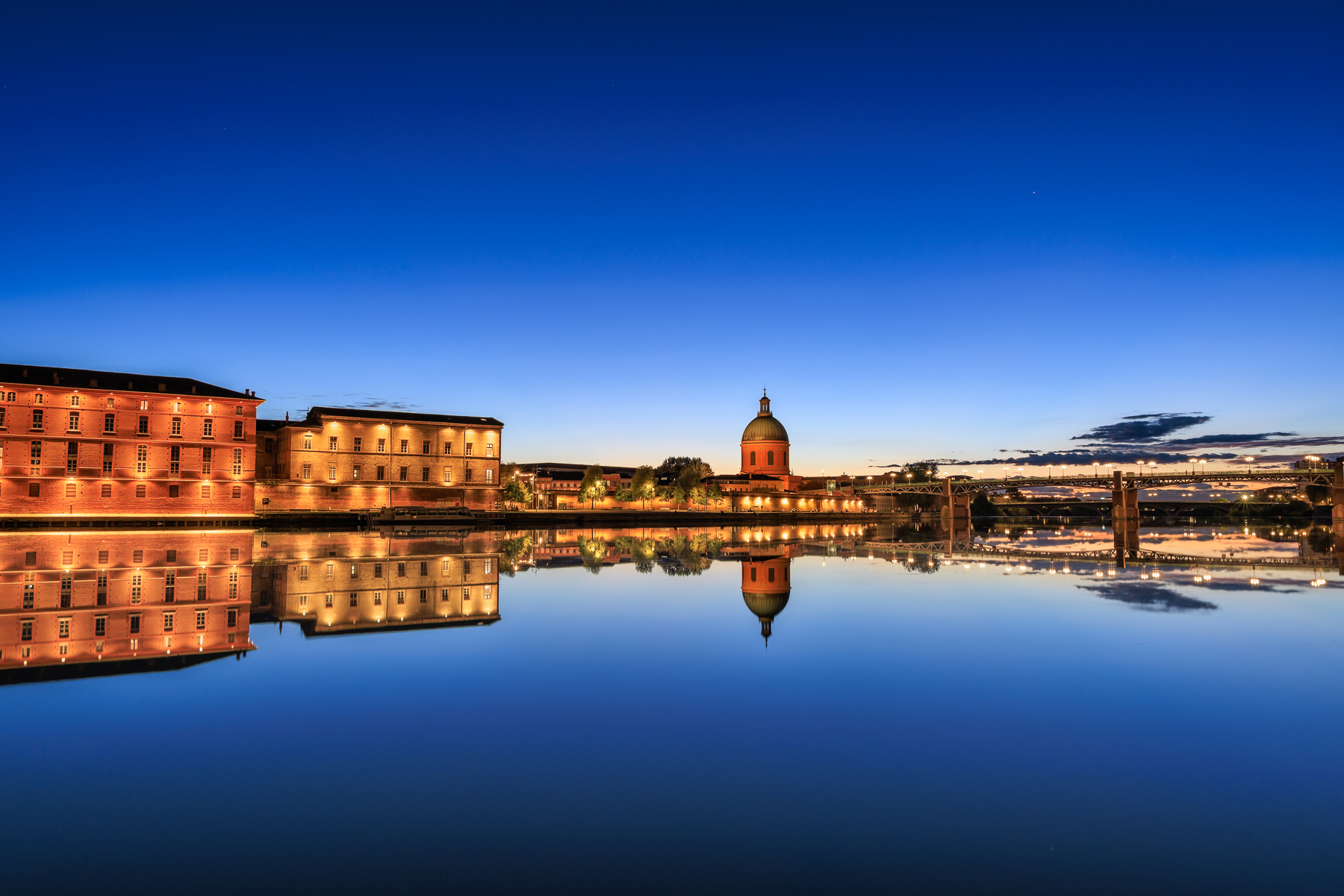
Blue Hour on the Garonne, Toulouse - Heure bleue sur la Garonne, Toulouse
EN: Reflections of the Hôtel-Dieu Saint-Jacques, the Dome of La Grave, and the Pont Saint-Pierre glow along the Garonne at twilight. Once home to hospitals and pilgrims, these landmarks now stand as enduring symbols of Toulouse, the “Ville Rose.”
FR: Reflets de l’Hôtel-Dieu Saint-Jacques, du Dôme de La Grave et du pont Saint-Pierre illuminant la Garonne au crépuscule. Jadis lieux d’accueil pour les malades et les pèlerins, ces monuments demeurent aujourd’hui des symboles emblématiques de la « Ville Rose ».
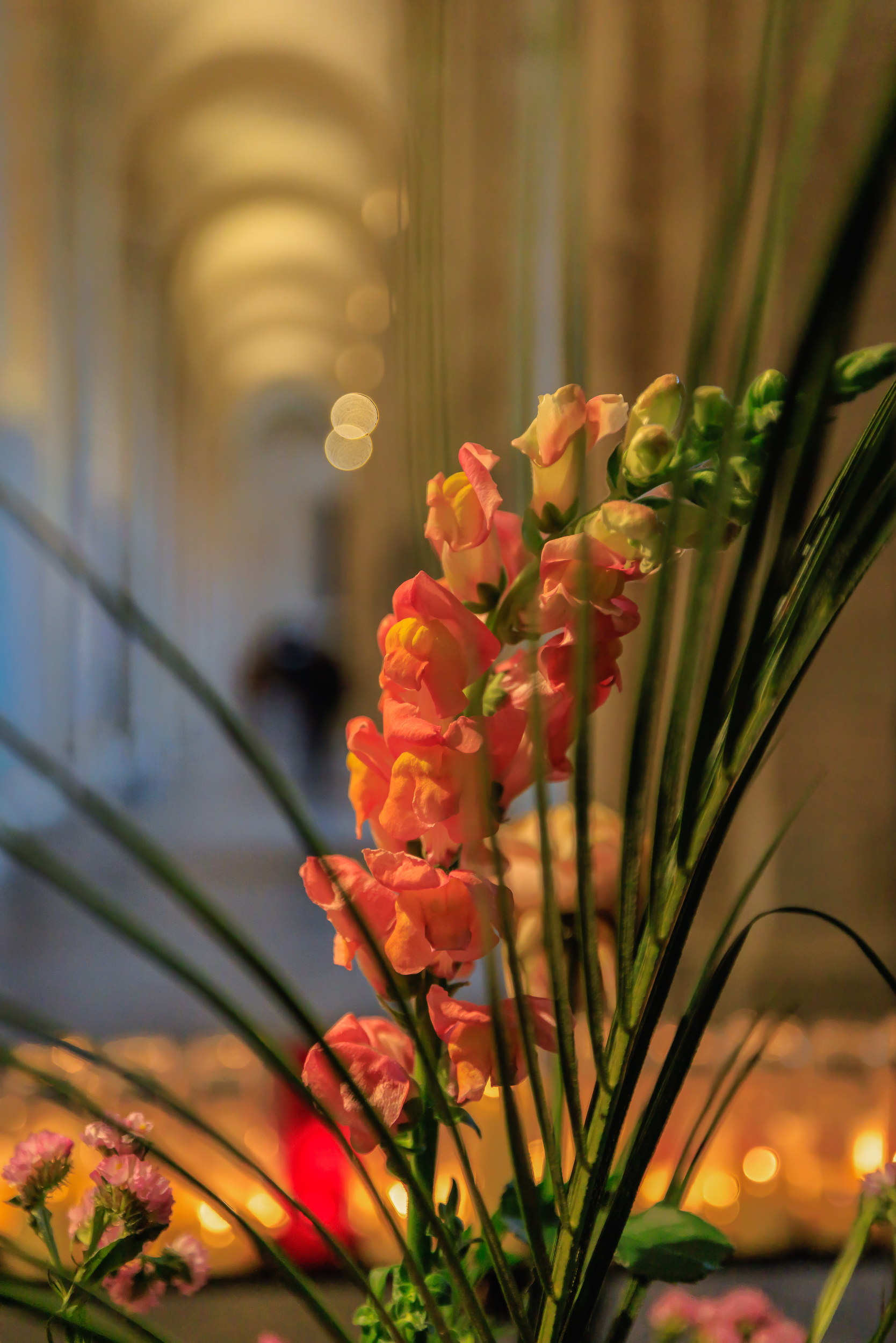
Flowers in the Basilica of La Daurade, Toulouse - Fleurs dans la basilique de la Daurade, Toulouse
EN: Fresh flowers placed inside the Basilica of Notre-Dame de la Daurade, with votive candles glowing in the background.
FR: Des fleurs fraîches déposées dans la basilique Notre-Dame de la Daurade, avec les cierges allumés en arrière-plan.
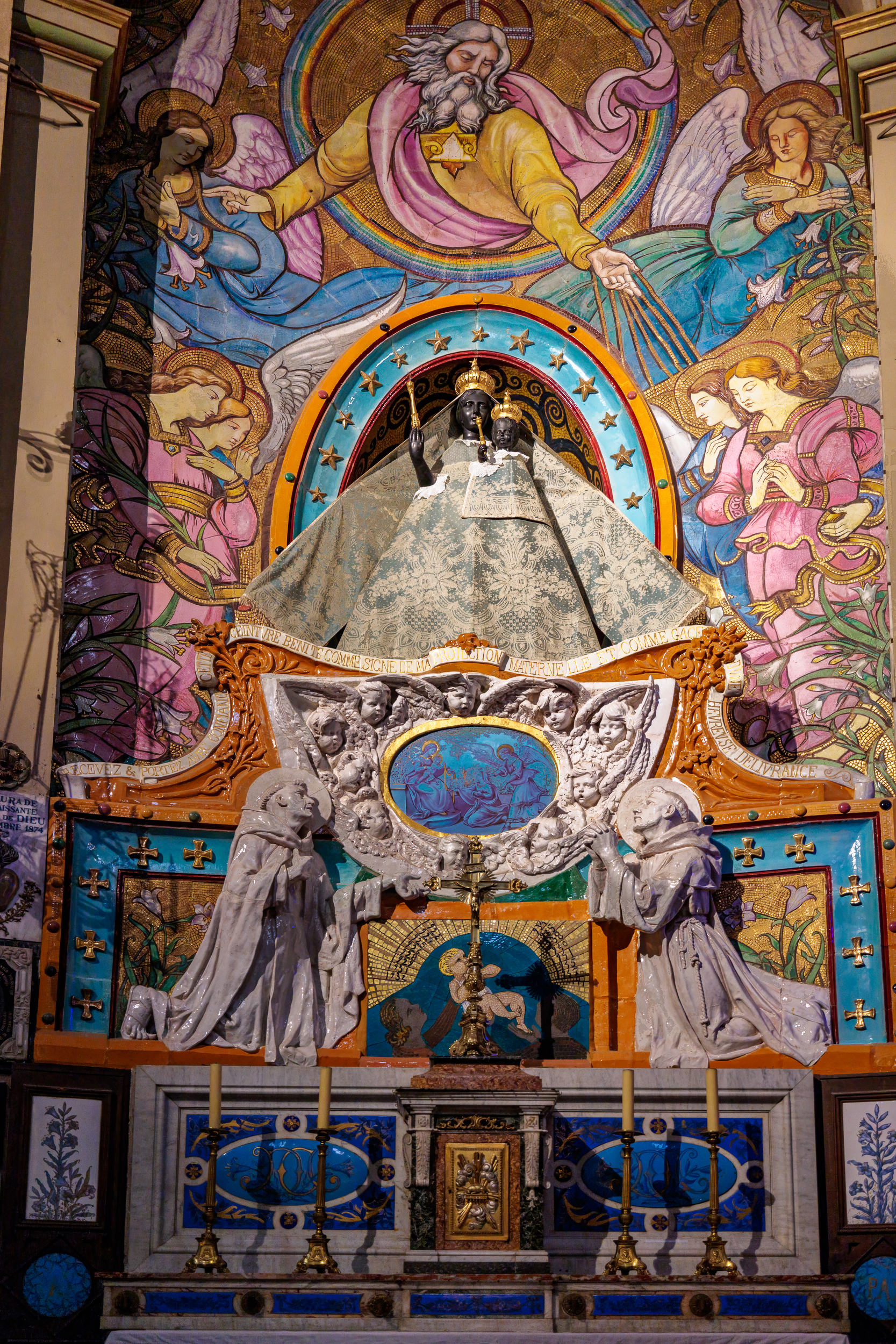
The Black Madonna of La Daurade, Toulouse - La Vierge Noire de la Daurade, Toulouse
EN: Venerated since the Middle Ages, the Black Madonna of Notre-Dame de la Daurade is one of Toulouse’s most important Marian figures. Shown with the Child beneath a protective mantle, she is linked to the safeguarding of the city and the boatmen of the Garonne. Like the Black Madonna of Częstochowa in Poland, she belongs to a wider European tradition in which these dark icons symbolize divine mystery, closeness to the people, and the promise of protection. Their color, sometimes born of centuries of patina, also evokes the depth and eternity of faith.
FR: Vénérée depuis le Moyen Âge, la Vierge Noire de la basilique Notre-Dame de la Daurade est l’une des figures mariales les plus emblématiques de Toulouse. Représentée avec l’Enfant sous un manteau protecteur, elle est associée à la protection des habitants et des marins de la Garonne. Comme la Vierge noire de Częstochowa en Pologne, elle s’inscrit dans une tradition européenne où ces icônes sombres symbolisent à la fois le mystère divin, la proximité avec le peuple et la promesse de protection. Leur couleur, née parfois de la patine du temps, évoque aussi la profondeur et l’éternité de la foi.
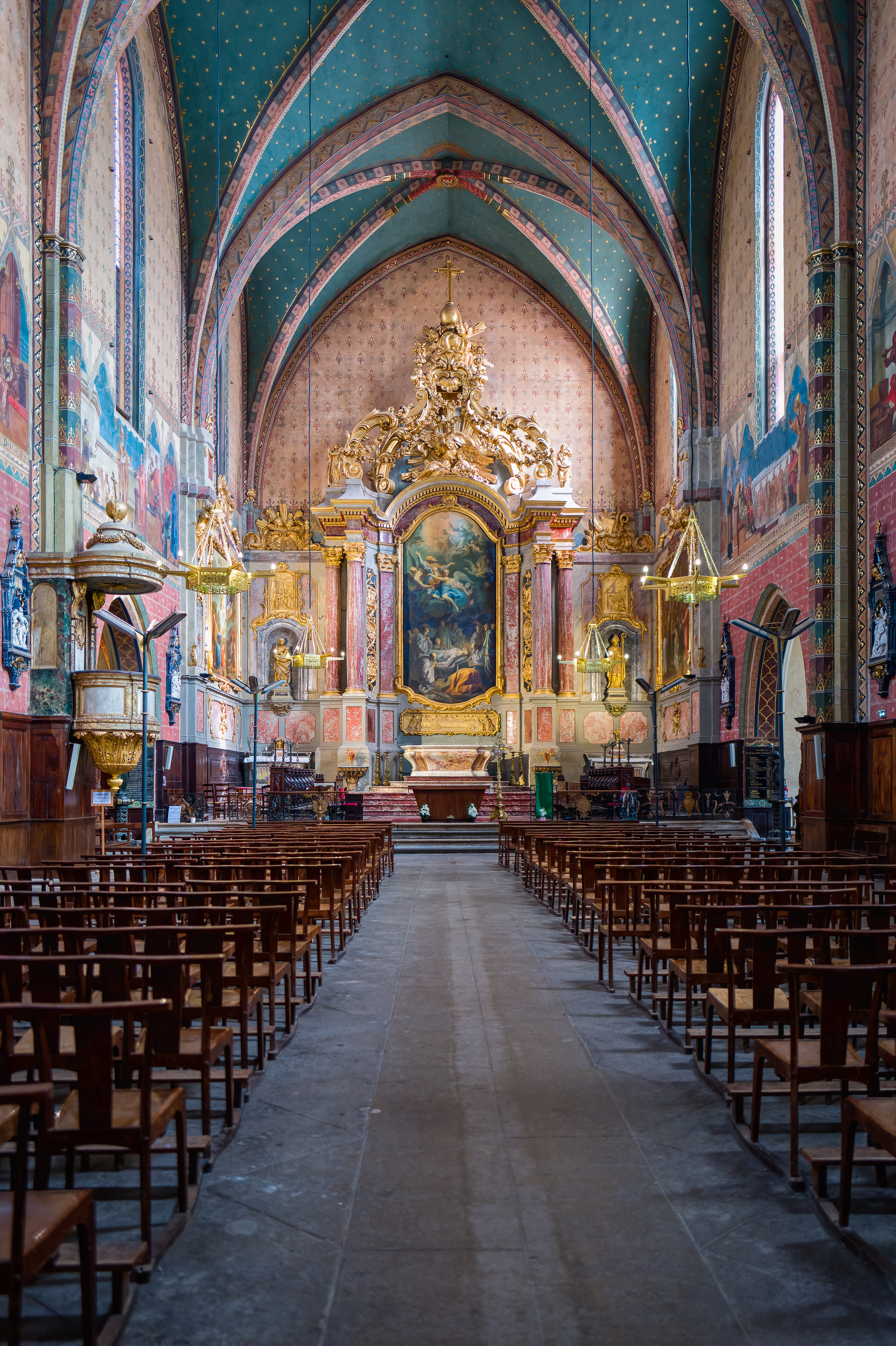
Intérieur de Notre-Dame de la Dalbade, Toulouse - Interior of Notre-Dame de la Dalbade, Toulouse
FR: Fondée au XVe siècle et reconstruite après plusieurs destructions, l’église Notre-Dame de la Dalbade cache derrière sa façade sobre un intérieur d’une grande richesse. Sa voûte bleue étoilée et son retable baroque doré dominent la nef, offrant un contraste saisissant entre austérité extérieure et splendeur intérieure.
EN: Founded in the 15th century and rebuilt after several setbacks, Notre-Dame de la Dalbade conceals behind its plain façade a richly decorated interior. The starry blue vault and gilded Baroque altarpiece dominate the nave, creating a striking contrast between exterior simplicity and interior splendor.